PhD in Advanced Materials
Doctor in Advanced Materials
3 years, 4 months
Credits:120
In-person
$15.400
Enrollment: $1.400
Tuition $14.000
All students accepted into the program receive a full scholarship on tuition. They only need to cover the enrollment fee.
Full time
January, 2027
Until November 4, 2026, submit the complete documentation to Admissions.
College of Sciences and Engineering (Polytechnic)
RPC-SO-15-No.212-2025 , April 16, 2025
Campus Santiago Gangotena
Research the materials that drive innovation
The USFQ Doctorate in Advanced Materials prepares you to research, design, and understand materials with innovative properties that drive advances in energy, electronics, health, manufacturing, and sustainability.
You integrate science, experimentation, and modeling to develop technological solutions with impact. You work on the relationship between structure, properties, and performance of materials, and contribute to innovation in processes, devices, and applications with industrial and scientific reach.
Program Objective
You develop the ability to produce original knowledge about advanced materials, their structure, behavior, applications, and technological potential.
You also design scientific projects, publish results, and lead research lines in academic and industrial contexts, with an impact on the development of new technologies.

Applicant and Graduate Profile
Who is this doctorate aimed at?
The Doctorate in Advanced Materials is aimed at professionals with postgraduate training in physics, chemistry, materials science, nanoelectronics, engineering or related fields, interested in conducting scientific research at the highest level. Applicants must have a solid foundation in fundamental sciences and research methods, critical analysis skills, and prior experience in research activities.
Additionally, aptitude for formulating and addressing complex scientific problems, working autonomously and collaboratively, and contributing to the generation of new knowledge in advanced materials is expected.
What will your professional outlook be?
As a graduate of the Doctorate in Advanced Materials, you will conduct original, high-level scientific research, integrating theoretical, experimental and analytical knowledge to address complex problems in materials science and engineering. You will design and characterize new materials, critically interpret results, and generate knowledge with potential for technological application. You will lead interdisciplinary projects and develop innovative solutions in areas such as nanotechnology, electronics, energy, health, sensors and communications.
Furthermore, you will drive innovation and technology transfer processes, linking scientific research with the needs of industry and society.
Connects science, technology and society
The Liberal Arts approach strengthens your ability to analyze, communicate, and contextualize your research.
You learn to explain complex science clearly, argue with rigor, and place technological development within an ethical, social, and global framework.

Access specialized laboratories and high-level environments
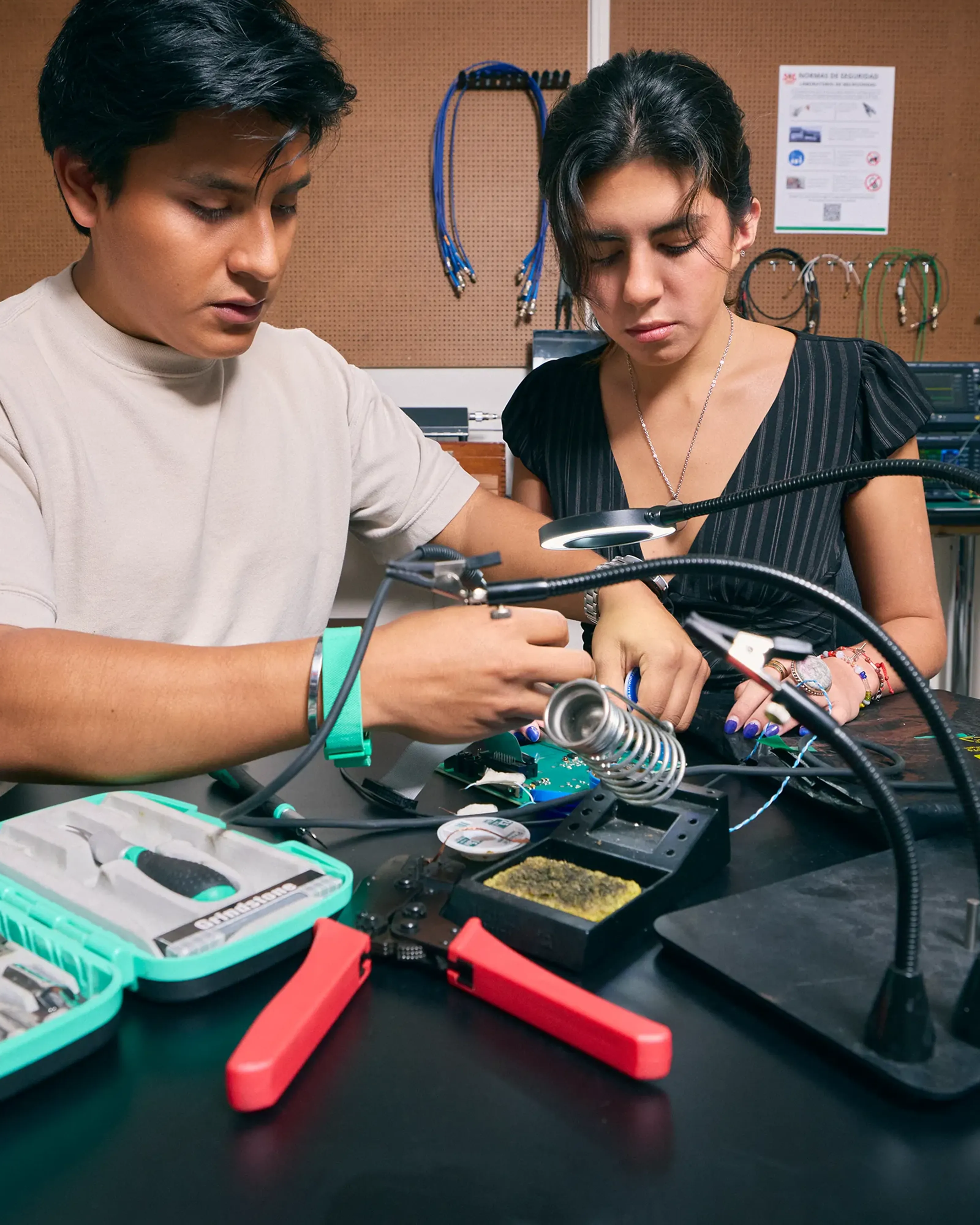
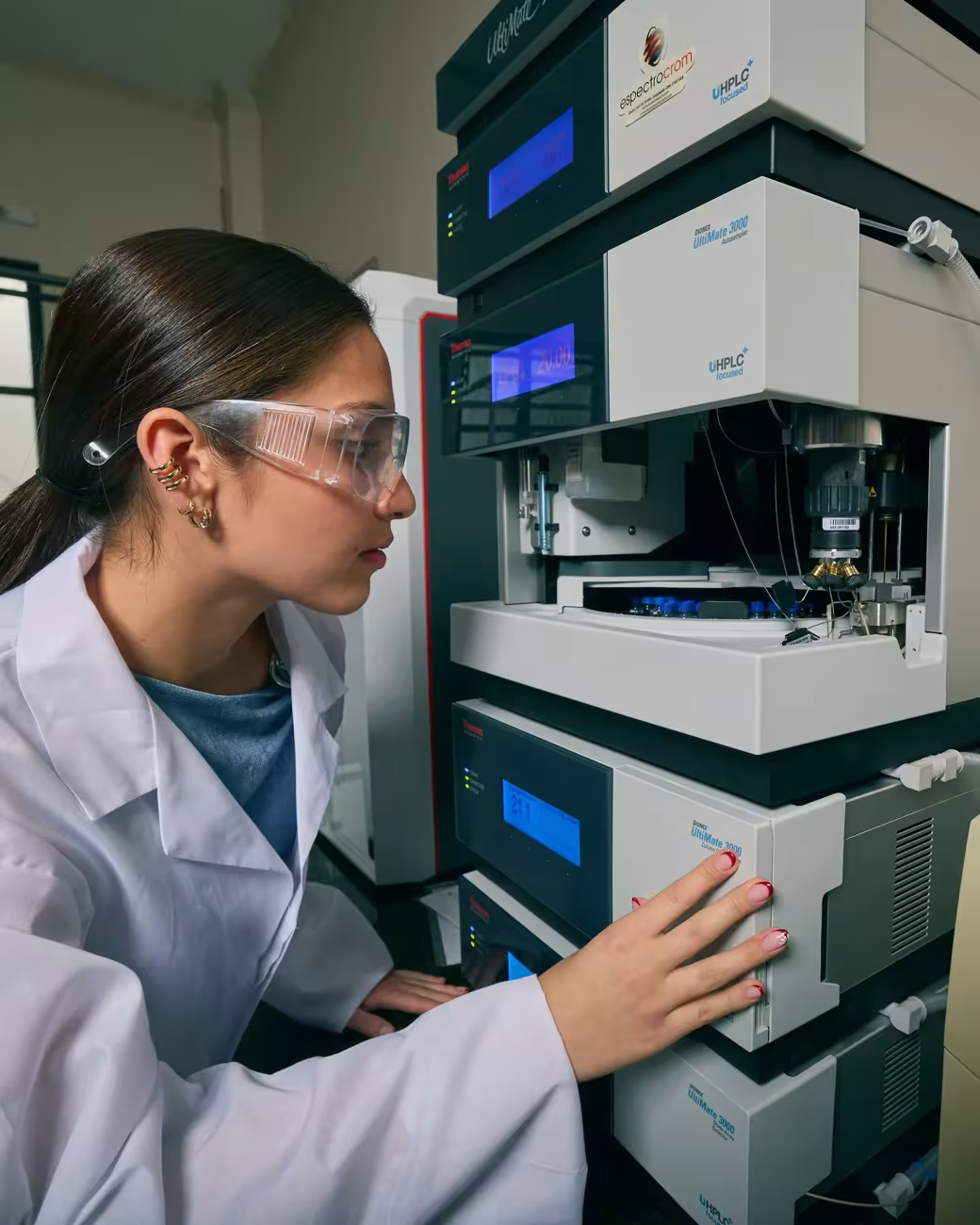
Your research takes place in spaces equipped for the synthesis, analysis, and characterization of advanced materials.
Includes
- Nanomaterials.
- Semiconductors and devices.
- Biomedical materials.
- Polymers and composites.
- Photonics and energy.
- Advanced manufacturing and materials processing.
- 3D printing and additive manufacturing.
- Coatings, surfaces, and mechanical properties.