Master's in Supply Chain Management
Master's in Supply Chain Management
1 year (2 regular periods and 1 extraordinary period)
Credits:31
Híbrida
$8.100
Enrollment: $736
Tuition: $7.364
Tuesday, Wednesday and Thursday 6:30 PM to 9:30 PM; Saturdays from 8:30 AM to 1:00 PM
August, 2026
August 2025 to June 2026 (subject to available spots)
College of Sciences and Engineering (Polytechnic)
RPC-SO-49-No. 787-2024, December 4, 2024
Campus Santiago Gangotena
Move resources with precision and design operations that work
The Master's in Supply Chain Management is designed to train you as a strategic leader, capable of optimizing logistics processes, integrating innovative technologies, and developing sustainable solutions in a globalized world.
You will be trained with a multidisciplinary approach that combines advanced analytics, technological tools, and a strategic vision so that you can efficiently manage the flows of information, products, and money in a globalized environment.

Program Objective
During the master's program, you develop the ability to design, manage, and optimize efficient and competitive supply chains. You integrate analytics, technology, and operational strategies.
You acquire skills to plan demand, manage risks, optimize processes, and coordinate logistics networks that respond to the challenges of a digital and globalized environment.


Applicant and Graduate Profile
Who is this master's degree aimed at?
Professionals with a bachelor's degree in Engineering, Industry and Construction; Business Administration and Law; Natural Sciences, Mathematics and Statistics; Agriculture, Forestry, Fishing and Veterinary; and related fields. Additionally, professionals with relevant work experience will be considered.
If you do not hold a bachelor's degree in these fields, the applicant's professional and academic profile will be evaluated, and at least 3 months of relevant work experience will be required, along with participation in diploma programs or other courses in logistics or supply chain, analytical skills, and an interest in technologies applied to logistics management and process improvement.
What will your professional outlook be?
You will develop the ability to integrate purchasing, production, transportation, inventory and distribution, model complex logistics systems and apply technologies to optimize operational efficiency.
You will be able to work in sectors such as logistics, manufacturing, retail, technology, energy, food and international trade, in both domestic and international organizations.
Liberal Arts to lead intelligent supply chains
The Liberal Arts approach expands your ability to analyze logistics systems from multiple dimensions: economic, social, environmental, and technological, with a focus on leadership and communication.
This allows you to make operational decisions with strategic vision, ethical responsibility, and an understanding of the impact that supply chains have on organizations and society.
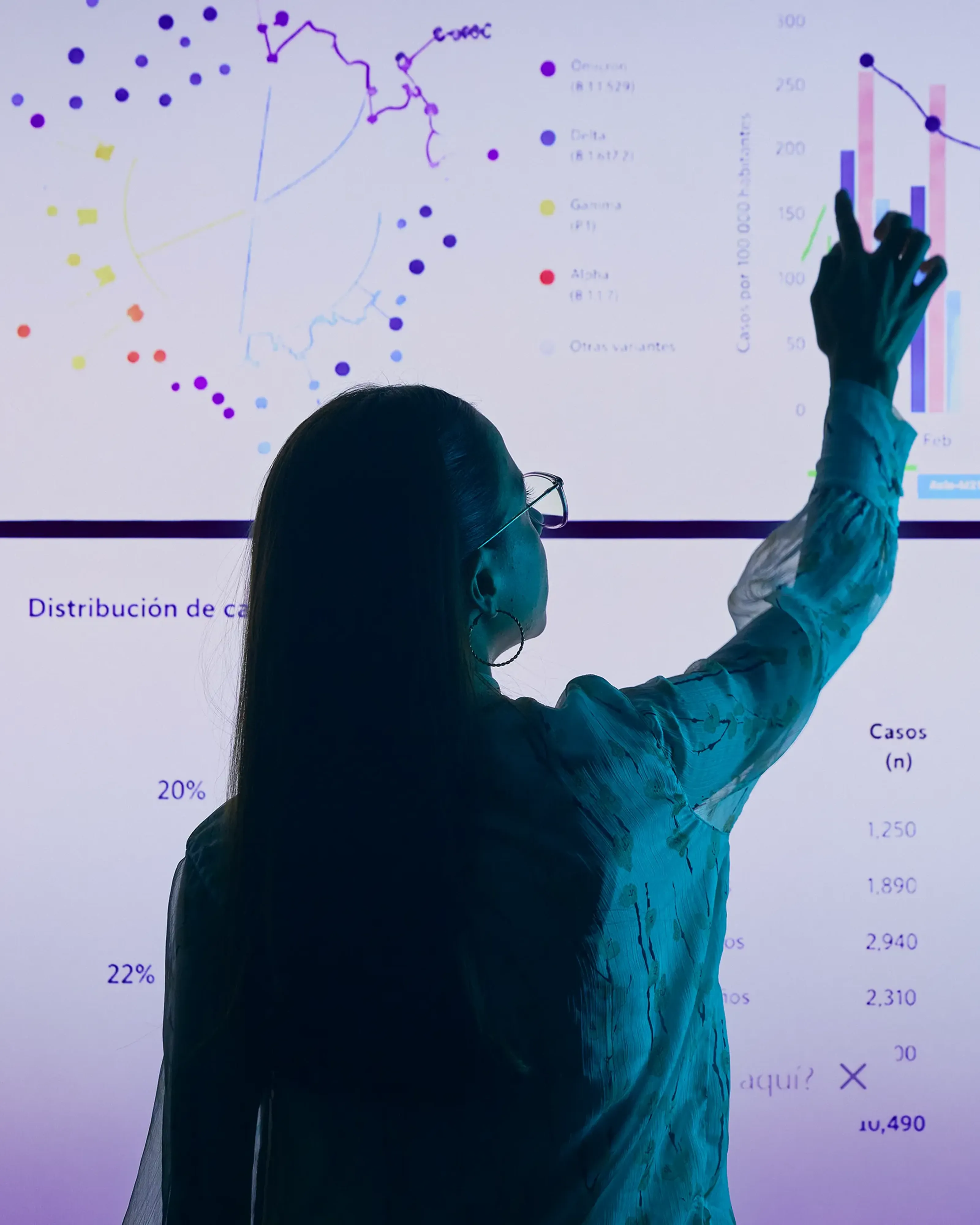
Connect with the industry and its challenges
In the master's program, you work with organizations and specific cases from the logistics sector, and you analyze risk situations, operations, and distribution.
Includes
- Analysis of real supply chain cases.
- Use of technological tools for logistics management.
- Interaction with professionals and companies in the sector.