Civil Engineering
Civil Engineer
9 semesters
Credits:142
In-person
College of Sciences and Engineering (Polytechnic)
RPC-SO-05-No.098-2020
RPC-SO-26-No.499-2016
Campus Santiago Gangotena
Design and build the infrastructure of the future
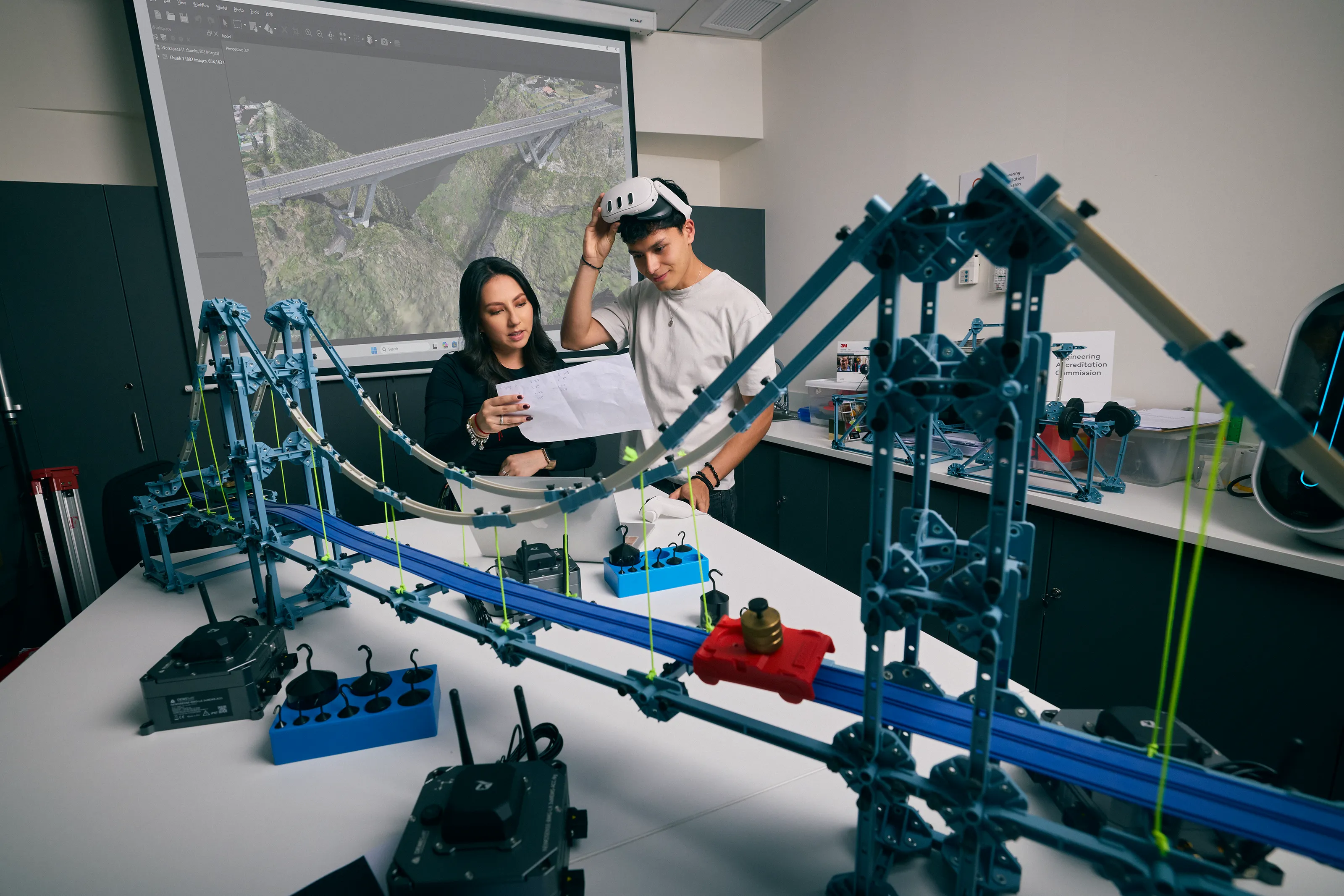
By studying Civil Engineering at USFQ, you will focus on planning, designing, and building infrastructure that solves or mitigates society's problems. At the same time, you will learn to apply different technical solutions to address these needs through the development of projects specific to the discipline.
In this regard, you will be trained in the field of infrastructure, covering various sectors, such as structures, roads, water resources, geotechnics, and construction project management.

The structure beyond the plane
The Liberal Arts model allows you to analyze each infrastructure project with a comprehensive vision, where technical knowledge, management, communication, and ethical criteria converge. You learn to propose, design, and build safe, functional, creative, and innovative projects.
USFQ Method
- The program has 100% faculty with PhDs, who engage in teaching and research activities at an international level.
- A modern curriculum, compatible with those of prestigious universities in North America and Europe, facilitating international exchanges and internships.
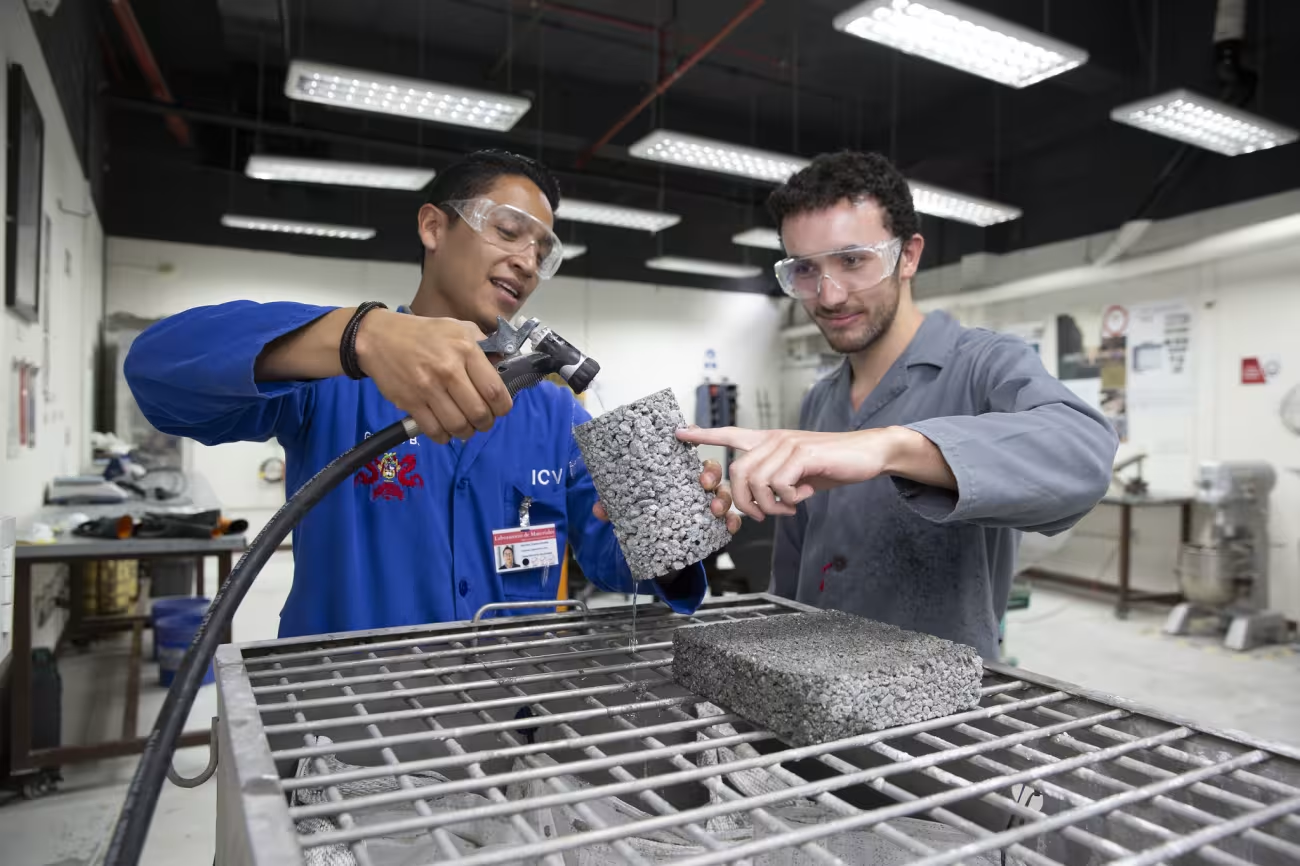
- Concrete, geotechnical, road design, structures, hydraulics, and pavement laboratories, with modern equipment.
- Recipients of recognition from the American Concrete Institute ACI, obtaining the ACI Excellence University Award, an award achieved every year since 2015.
- Active participation in international student competitions of the American Concrete Institute ACI, obtaining more than 12 awards (4 of them achieving first place), demonstrating a very high level in the application of Concrete technology.
- ACI Student Chapter, ASCE Student Chapter, and Engineers without Borders Student Chapter, where students participate in research activities, training, academic and social events, conferences, seminars, community outreach projects, etc.
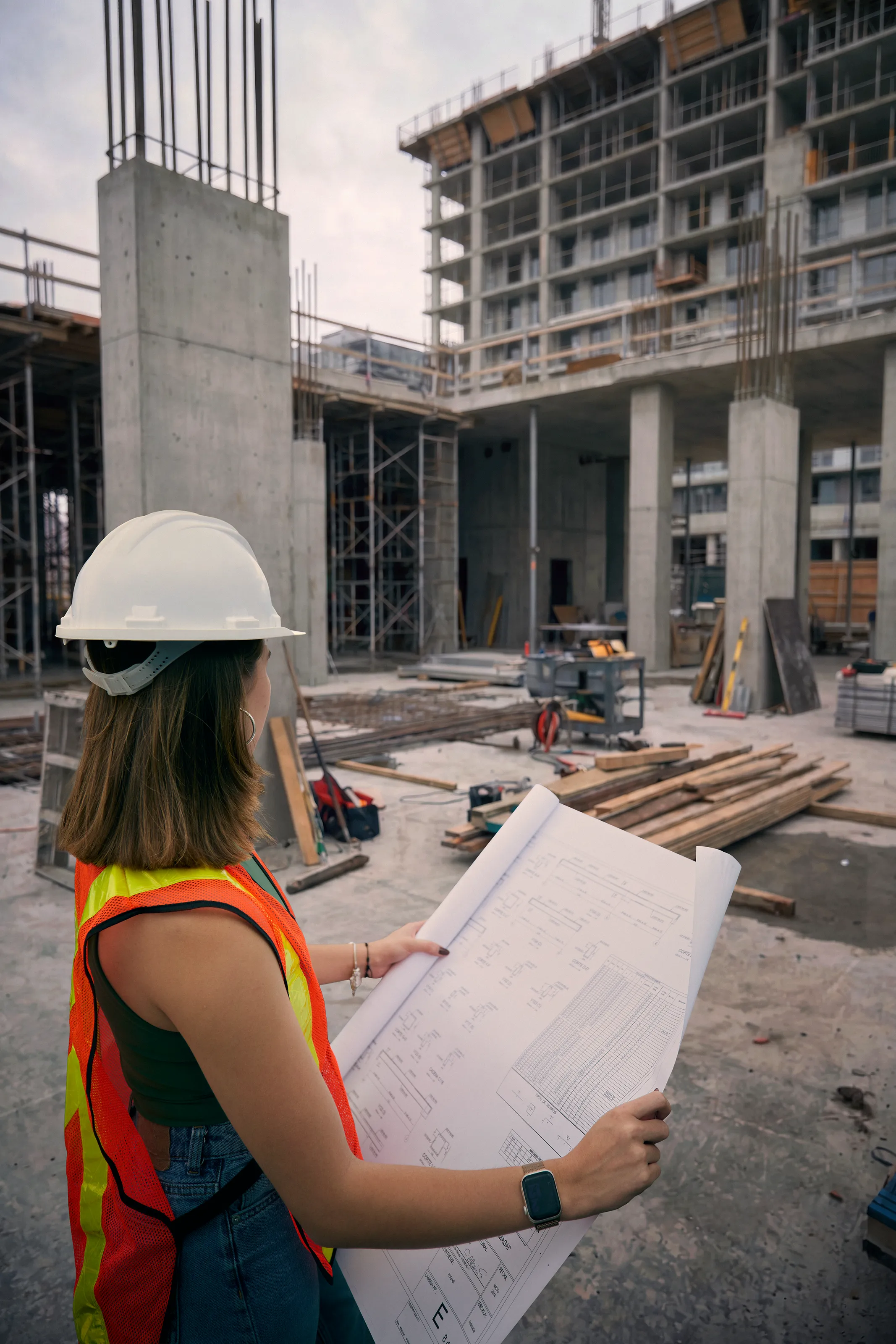
Prepare yourself to lead the major infrastructure projects of the country
Your education is enriched with exchange opportunities, research alongside your professors, and industry engagement. You graduate prepared to design, build, and lead civil projects in national and international contexts.
Your education is enriched with exchange opportunities, research alongside your professors, and industry engagement. You graduate prepared to design, manage, and lead civil projects in national and international contexts.
International Accreditation
Program Educational Objectives (PEO):
- PEO 1: Demonstrate technical competencies and skills in the areas of civil engineering (structures, road design, geotechnics, and construction management) that allow graduates to design and deliver solutions to society's problems through civil engineering projects. (Technical Knowledge).
- PEO 2: Understand the role of civil engineering in the development of society (Engineering and Society Development).
- PEO3: Embrace the liberal arts philosophy as a positive and integral agent of society, one that continually proposes creative solutions (Humanistic).
- PEO4: Pursue continuous education as a professional practice to strengthen skills and broaden knowledge (Lifelong Learning).
Student Outcomes (SO)
Engineering Fundamentals and Problem Solving
SO 1: An ability to identify, formulate, and solve complex engineering problems by applying principles of engineering, science, and mathematics
Engineering Design
SO 2: An ability to apply engineering design to produce solutions that meet specified needs with consideration of public health, safety, and welfare, and with consideration of global cultural, social, environmental, and economic factors
Effective Communication
SO 3: An ability to communicate effectively with a range of audiences
Contemporary Issues and Ethical Responsibility
SO 4: An ability to recognize ethical and professional responsibilities in engineering situations and make informed judgments, which must consider the impact of engineering solutions in global economic, environmental, and social contexts.
Teamwork and Organization
SO 5: An ability to function effectively on a team whose members together provide leadership and create a collaborative and inclusive environment, capable of establishing goals, planning activities, and achieving objectives.
Experimental Design and Analysis
SO 6: An ability to develop and conduct experiments appropriately, analyze and interpret data, and use engineering judgment to draw conclusions.
Long-term Learning and Knowledge Expansion
SO 7: An ability to acquire and apply new knowledge as needed, using appropriate learning strategies.

Accreditations

La carrera de Ingeniería Civil está acreditada desde el año 2023, por la Comisión de Acreditación de Ingeniería de ABET, https://www.abet.org, bajo los Criterios Generales y los Criterios de Programas de Ingeniería Civil y de Ingeniería con Nombres Similares.
-
La carrera de Ingeniería Civil está acreditada desde el año 2023, por la Comisión de Acreditación de Ingeniería de ABET, https://www.abet.org, bajo los Criterios Generales y los Criterios de Programas de Ingeniería Civil y de Ingeniería con Nombres Similares.
Projects that go beyond the classroom
Graduates work in consulting, structural, geotechnical, hydraulic, and road design, construction, and urban and rural planning. They work in sectors such as transportation, energy, and risk management, in both public and private companies as well as in their own ventures linked to the construction sector, inside and outside of Ecuador.
"Having achieved the position of associate professor at the University of Toledo, USA, thanks to his postdoctoral research work".
– Juan José Recalde