Clinical Psychology
Bachelor's in Clinical Psychology
9 semesters
Credits:137
In-person
College of Social Sciences and Humanities
RPC-SO-31-No.517-2023 August 02, 2023
RPC-SO-31-No.517-2023
Campus Santiago Gangotena
Accompany processes that transform lives
In Clinical Psychology at USFQ, you learn to evaluate, understand, and accompany people in their emotional, behavioral, and relational experiences. You develop skills to listen, analyze, and guide with a scientific basis and human approach.
You prepare yourself to provide care, diagnosis, and intervention with depth, ethics, and commitment.

Human approach beyond the symptom
Clinical practice requires a perspective that transcends technique. During your training, you develop tools to understand how people think and feel, and how the environment influences each therapeutic process.
The Liberal Arts model allows you to integrate cultural, social, biological, and communicational perspectives into your clinical analysis. You approach each person with a broad and sensitive outlook, applying methods with judgment, ethics, and comprehensive understanding.
USFQ Method
Simulated patients with professional actors
One of the hallmarks of our training is the use of simulated patients, portrayed by professionally trained actors to represent different clinical presentations.
This methodology is used in key courses such as Clinical Skills, Clinical Interview, Clinical Intervention 1, and Psychotherapy 1 and 2, allowing students to practice in a safe environment, receive feedback, and refine their competencies before working with real patients.
Writing, reflection, and critical thinking
Students develop clinical essays, psychological reports, reflective journals, and research projects as a fundamental part of their training.
Writing is used as a tool to think, integrate, and communicate in an ethical and professional manner.
Problem-based learning (PBL) and interdisciplinarity
The problem-based learning approach is used, where students face complex clinical situations that must be resolved as a team.
Collaboration with other faculties (such as Medicine, Law, Veterinary Medicine, Education, Dentistry, etc.) is actively encouraged, reinforcing the value of interdisciplinary work in addressing mental health.

Clinical practice with responsibility and judgment
You practice with simulated patients from the fourth semester. You develop clinical interviewing, assessment, and intervention skills aimed at children, adolescents, and adults. You learn to formulate hypotheses, structure therapeutic processes, and make decisions with professional judgment.
You integrate theory and practice with expert supervision. You are trained in psychotherapeutic approaches with scientific evidence such as: Cognitive-Behavioral Therapy (CBT), Acceptance and Commitment Therapy (ACT), and Dialectical Behavior Therapy (DBT).
Additionally, you can study one or two semesters at partner universities or take your seventh semester at GAIAS Valencia, which broadens your academic and cultural experience.

Applicant and Graduate Profile
Who is the program intended for?
It is aimed at those who value critical analysis, teamwork, and ethical responsibility.
At those who seek to develop clinical skills with a scientific foundation and take on the challenge of training as professionals with judgment, empathy, and respect for human diversity.
What will your professional outlook be?
You will develop competencies to evaluate, diagnose, and intervene in mental health processes with a scientific foundation and ethical judgment. You will be able to work in hospitals, health centers, educational institutions, and specialized organizations, or practice independently in private practice.
Your training will also prepare you to access master's and specialization programs in psychotherapy, mental health, research, and related fields, with national and international projection.
Scholarships
Talent needs space to grow.
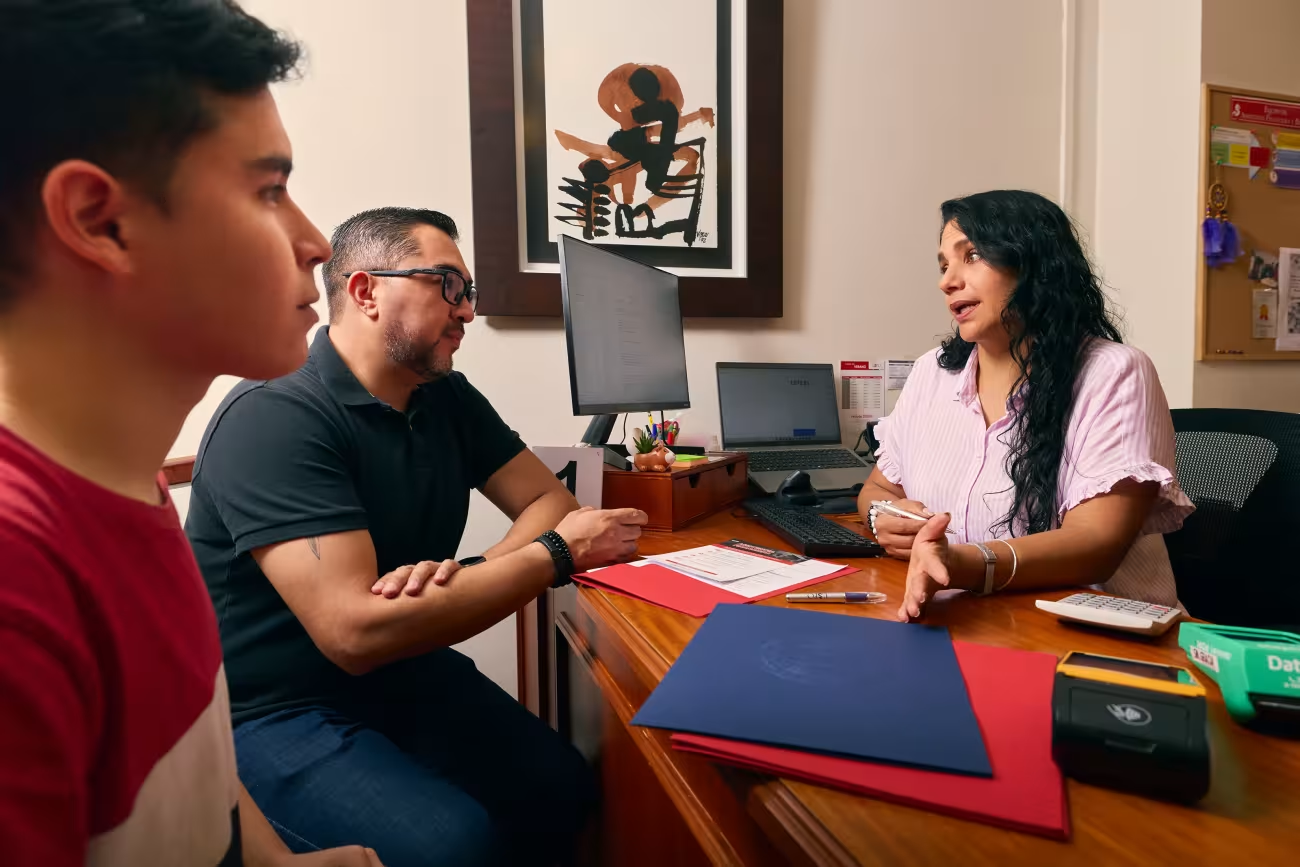
During your admissions process you can apply for the scholarships offered by USFQ. These recognize academic merit, discipline, leadership and performance in different areas, and are designed to propel you from the start of your career.
Financial Assistance
Being educated with freedom also means having timely support.
USFQ offers financial assistance programs and personalized guidance so that your decision to study is clear, responsible, and achievable.
Contact Us
María Gabriela Romo Barriga
Psychology Professor
Clinical Psychology Coordinator
Office CT003
(+593 2) 297-1700
mgromo@usfq.edu.ec
Camila Alejandra Merino Larrea
Learning Center Coordinator and Vocational Advisor
Office H-202B
(+593 2) 297 17002315
cmerino@usfq.edu.ec