Electronics and Automation Engineering
Electronics Engineer
9 semesters
Credits:142
In-person
College of Sciences and Engineering (Polytechnic)
RPC-SO-05-No.098-2020
Degree program approved according to RANT: Electronics and Automation
RPC-SO-31-No.576-2016
Campus Santiago Gangotena
Technology that makes the world work
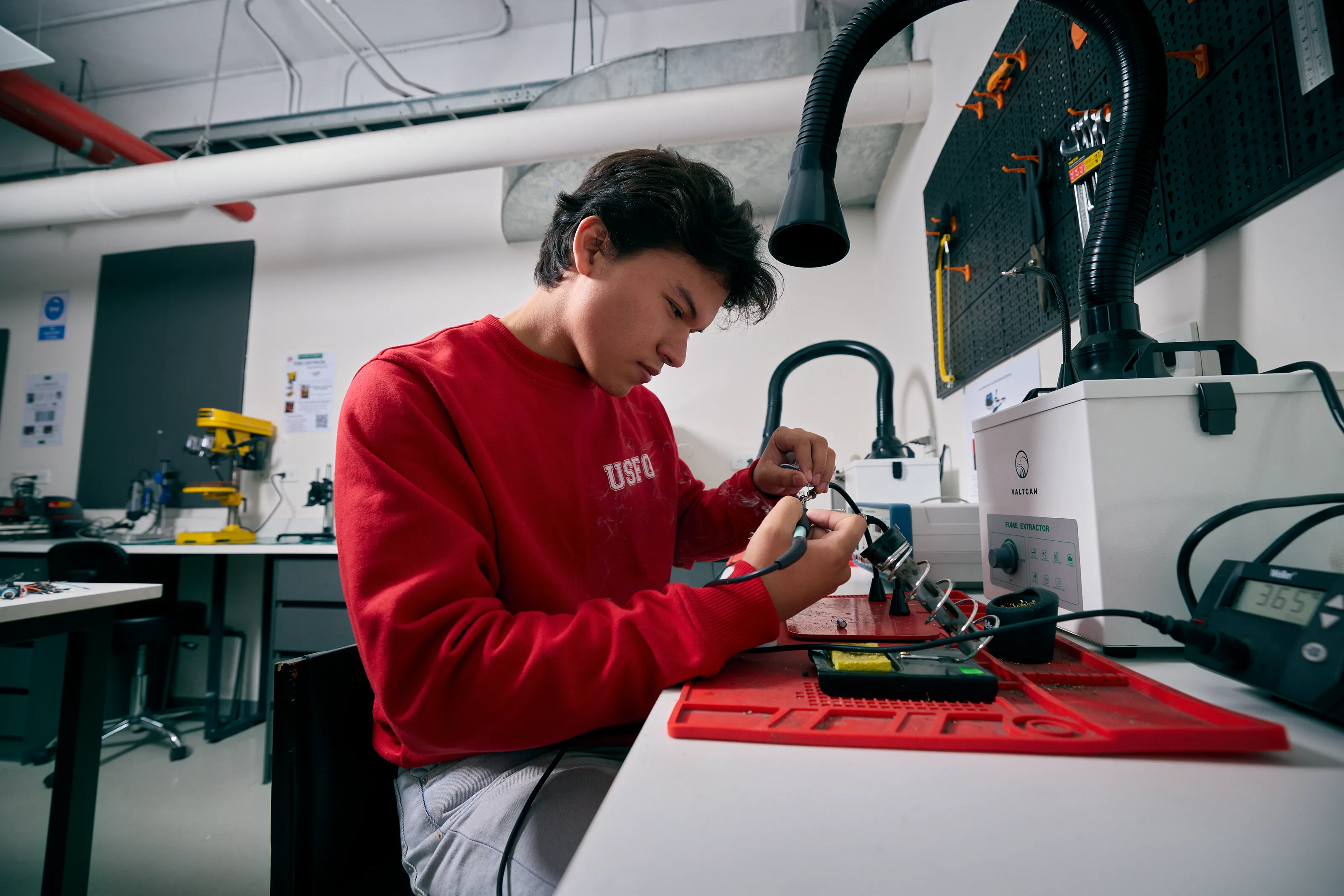
In Electronics and Automation Engineering at USFQ, you learn to create, integrate, and optimize intelligent systems that control processes, machines, and technologies present in industry, energy, healthcare, and everyday life.
You transform physical and mathematical principles into applied solutions. You design, program, and automate industrial systems with technical expertise and practical vision.
You are trained to build technology that enables tasks to be performed with greater precision, speed, and efficiency.
Engineering beyond circuits
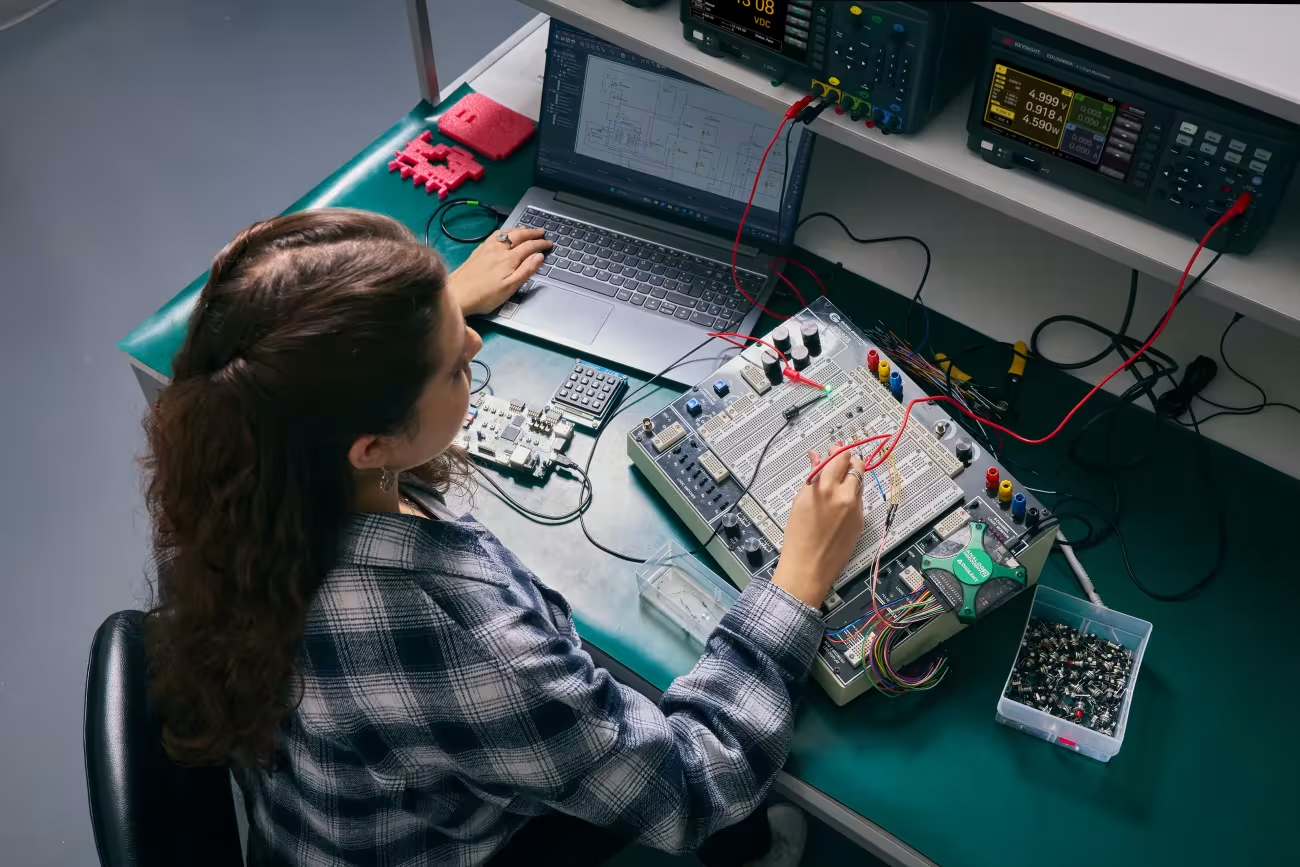
Liberal Arts enrich your education by integrating critical thinking, ethics, communication, management, innovation, and social analysis into your technical preparation. This approach allows you to design technological systems with rigor and awareness of their human, environmental, and productive impact.
USFQ Method
- At USFQ we believe that true engineering education is not achieved only in textbooks, but in practice. Our "learning by doing" philosophy is the heart of an education that prepares you to lead, innovate, and solve the technological challenges of tomorrow, from your very first day of class.
Explore engineering through practice
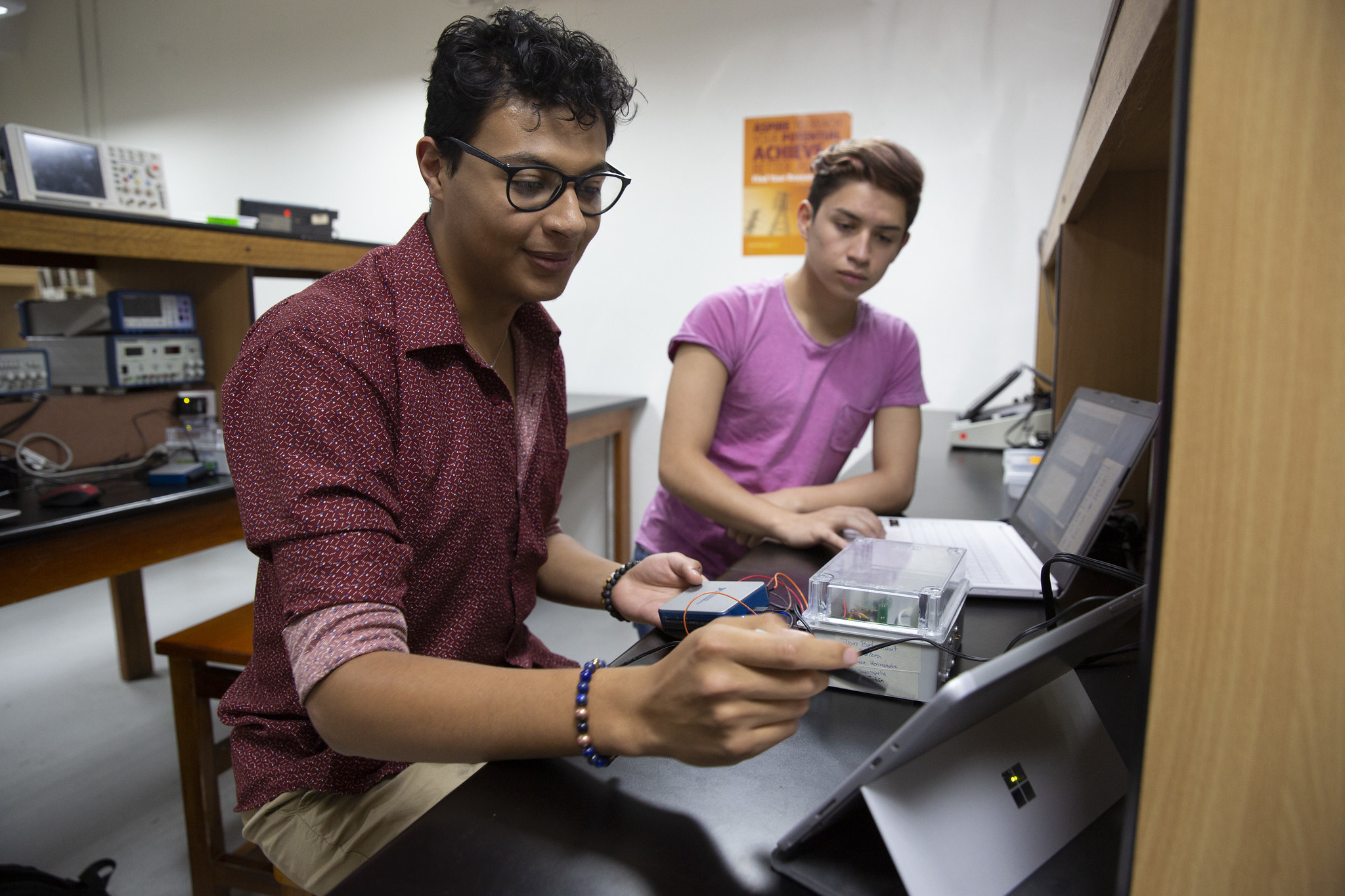
During the program you design circuits, program controllers, automate industrial processes and test prototypes in different contexts. You work with *hardware* and *software* used in the industry and constantly integrate theory and practice, which strengthens your professional preparation.
You participate in research, applied projects and technological challenges that develop your ability to solve complex problems with functional solutions.
You graduate with technical judgment, autonomy and execution capacity.
International Accreditation
Program Educational Objectives (PEO)
Engineering Professionals
PEO 1: Demonstrate a solid understanding of the fundamental principles, methods, practices and software tools used in Electronic Engineering and its related fields, be able to create and innovate, work in multidisciplinary teams with other engineers and professionals from different areas, and demonstrate a commitment to ethics and social responsibility.
Leaders and Entrepreneurs
PEO2: Act as leaders and entrepreneurs with skills focused on the design, development and implementation of engineering solutions.
Humanists
PEO3: Embrace the liberal arts philosophy as a positive and integral agent of society, constantly proposing creative solutions.
Continuous Learning
PEO 4: Exercise continuous improvement as engineers through professional development programs, graduate studies, training and independent research, following the liberal arts philosophy to contribute to sustainable and technological development practices.
Student Outcomes (SO)
SO1: Ability to identify, formulate and solve complex engineering problems by applying principles of engineering, science and mathematics.
SO 2: Ability to apply engineering design in the formulation of solutions that meet specific needs taking into account public health, safety and welfare, as well as global, cultural, social, environmental and economic factors.
SO 3: Ability to communicate effectively with different audiences.
SO 4: Ability to recognize ethical and professional responsibilities in engineering situations and make informed judgments, considering the impact of engineering solutions in global, economic, environmental and social contexts.
SO 5: Ability to function effectively in a team, where all members lead, create a collaborative and inclusive environment, set goals, plan tasks and meet objectives.
SO 6: Ability to develop and conduct appropriate experiments, analyze and interpret data and draw conclusions based on engineering criteria.
SO 7: Ability to acquire and apply new knowledge as needed, using appropriate learning strategies.
Stories that drive technological innovation
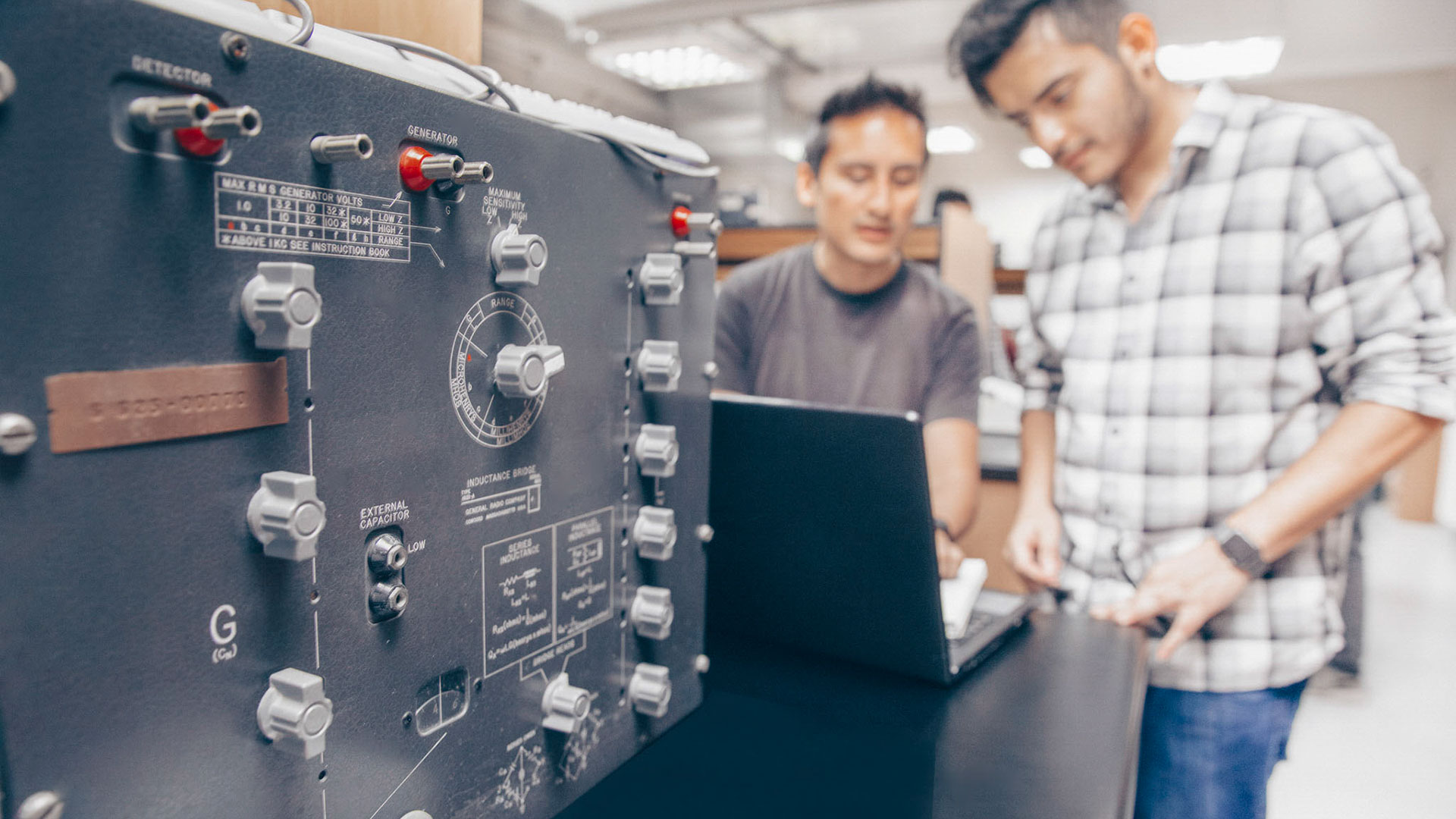
Graduates work in industrial automation, microelectronics, manufacturing, energy, telecommunications, robotics, intelligent systems, and technological development.
"USFQ, in an initial stage, taught me to appreciate the richness of diversity. Then, it taught me something deeper; to appreciate the importance of individuality and independence: it is only in the inner realm of the individual intellect, in systematic and disciplined questioning, in the passion and imagination that emanate when one does what one loves, that creativity is born. Creativity is necessary to give meaning, a purpose, to life. I learned to live in pursuit of a purpose, and not to live simply seeking to be happy.".
—Wladimir Benalcazar