Environmental Engineering*
Environmental Engineer
9 semesters
Credits:142
In-person
College of Sciences and Engineering (Polytechnic)
RPC-SO-05-No.098-2020
RPC-SO-22-No.368-2016
Campus Santiago Gangotena
Plan a more sustainable future
*Admission Moratorium: this program is not currently accepting new students.
In Environmental Engineering at USFQ, you will understand the relationship between natural and human systems to propose and design responsible solutions that protect the environment and contribute to sustainable development. You will work with data, territory, and communities for the prevention, control, assessment, and remediation of environmental pollution.
You will analyze problems related to water, soil, air, waste, and biodiversity, and propose applicable solutions with technical expertise, social sensitivity, and a forward-looking vision.
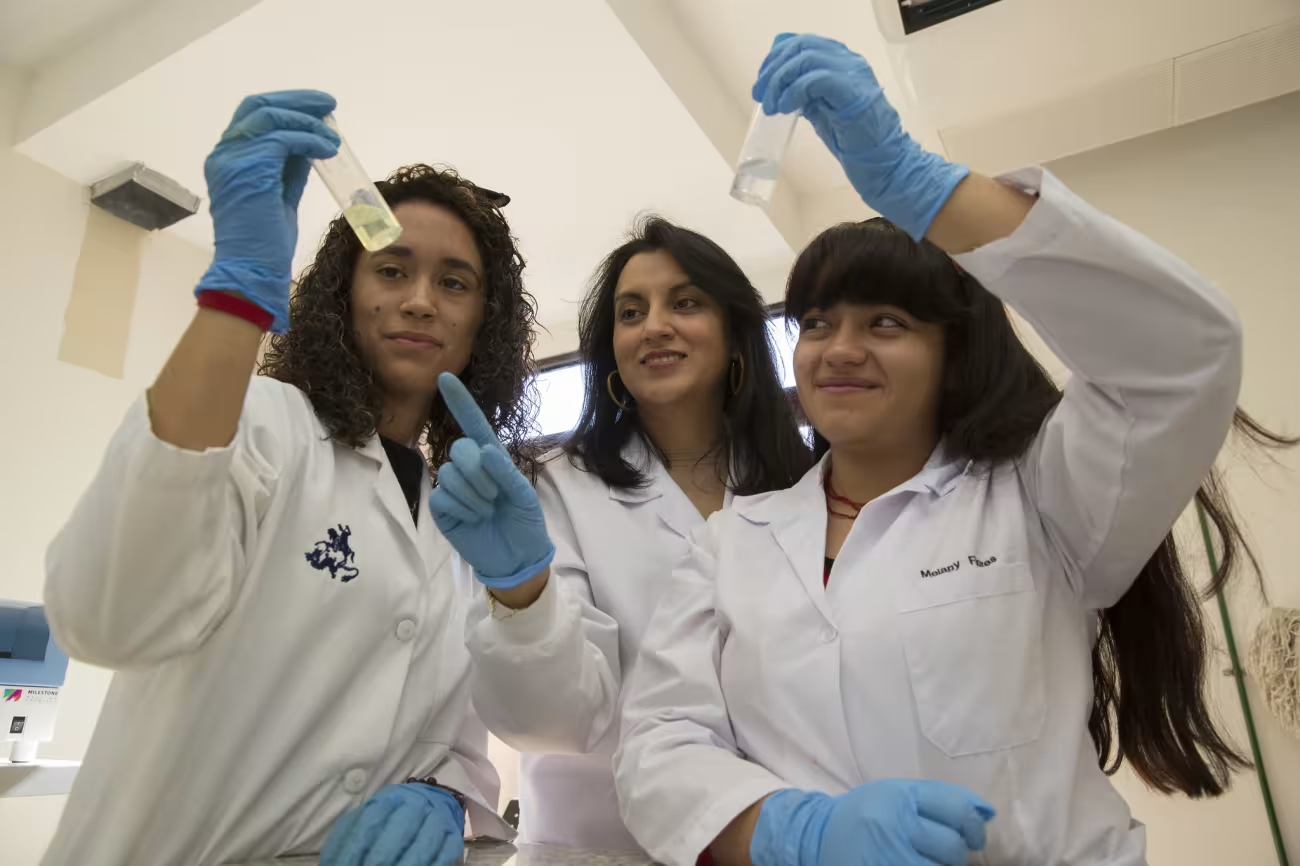
Study environmental problems from multiple disciplines
Environmental management combines science, technology, society, and policy. The Liberal Arts approach allows you to connect these disciplines to understand how ecosystems interact and why some solutions work better than others in different contexts.
You learn to interpret phenomena, anticipate risks, and design viable alternatives with technical judgment, social commitment, and a comprehensive vision.
USFQ Method
- Professors of the highest human and professional quality, with extensive local and international experience. Their academic training is first-rate (Ph.D. and M.Sc.) from universities with recognized international standing. They have extensive work experience and broad teaching skills, which benefits the integral development of students.
- Our students are prepared to solve the technical and scientific problems associated with environmental issues due to the high level of academic rigor maintained in the courses taught throughout the degree program.
- The commitment to environmental protection and sustainable development, and therefore to the common good, is an aspect that characterizes Environmental Engineering students.
- The program offers the opportunity to take advantage of exchange agreements with universities around the world, as well as the possibility of completing professional internships and volunteering both domestically and abroad.
- Our students participate in scientific research in areas specific to Environmental Engineering.
- Graduates of the Environmental Engineering program at USFQ have succeeded in pursuing advanced studies in other countries, becoming successful professionals in the field.
- Our students receive a comprehensive education based on the Liberal Arts, which makes them critical and independent thinkers, capable of formulating and implementing environmental solutions while considering political, social, technical, economic, and ethical aspects.

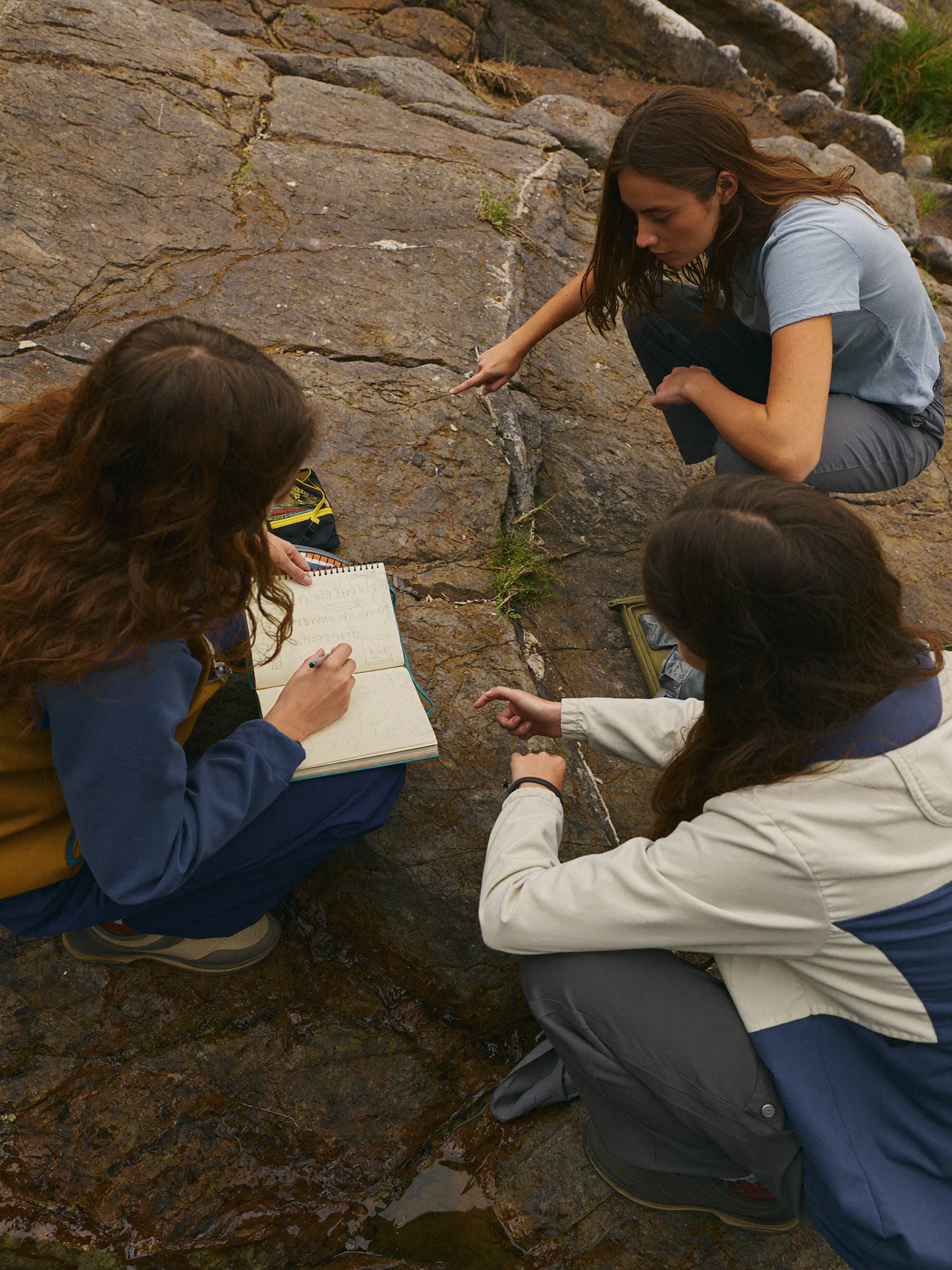
Experience engineering in the field
In this program, you connect theory with practice from day one. You collect samples, gather information, assess risks, and propose solutions in dialogue with ecosystems, communities, and contexts where environmental challenges arise.
You understand the environment through the ecosystems you seek to protect and the realities that shape them.
Your education is enriched by interdisciplinary projects and international opportunities that broaden your perspective and strengthen your analytical and design capabilities.
International Accreditation
Program Educational Objectives (PEO)
PEO 1: Graduates will be independent, innovative, and critical thinkers, and will embrace the liberal arts philosophy, supported by solid scientific and technical knowledge, which will provide them with recognition as professionals, researchers, or leaders.
PEO 2: Graduates will be able to formulate, design, and implement Environmental Engineering projects, through technical and effective solutions, in accordance with professional ethics.
PEO 3: Graduates will be able to work in interdisciplinary teams, promote interpersonal relationships, and build cooperative alliances with multiple stakeholders.
PEO4: Graduates will value the importance of continuous learning, through the acquisition of new knowledge and skills, to improve professional performance.
Student Outcomes (SO)
SO 1: Ability to identify, formulate, and solve complex engineering problems by applying principles of engineering, science, and mathematics
SO 2: Ability to apply engineering design to generate solutions that meet specific needs, considering public health, safety, and welfare; as well as global, cultural, social, environmental, and economic factors.
SO 3: Ability to communicate effectively with a variety of audiences
SO 4: Ability to recognize professional responsibility and ethics in engineering practice and to make informed judgments, considering the impact of engineering solutions in global, economic, environmental, and social contexts.
SO 5: Ability to work effectively as part of a team, whose members collectively provide leadership, create a collaborative and inclusive environment, establish goals, plan tasks, and meet objectives.
SO 6: Ability to develop and conduct appropriate experimentation, analyze and interpret data, and draw conclusions from an engineering perspective.
SO 7: Ability to acquire and apply new knowledge as needed, using appropriate learning strategies.