Food Engineering
Food Engineer
9 semesters
Credits:142
In-person
College of Sciences and Engineering (Polytechnic)
RPC-SE-01-No.006-2020
Program approved according to RANT: Food
RPC-SO-25-No.423-2016
Campus Santiago Gangotena
Design food and improve quality of life
In Food Engineering at USFQ you transform raw materials into safe, nutritious, and high-quality products. You analyze how ingredients interact and respond to different processes. And how to guarantee safe food for people.
Here you work with science, technology, engineering, and creativity to develop products that contribute to people's well-being.
The science behind food
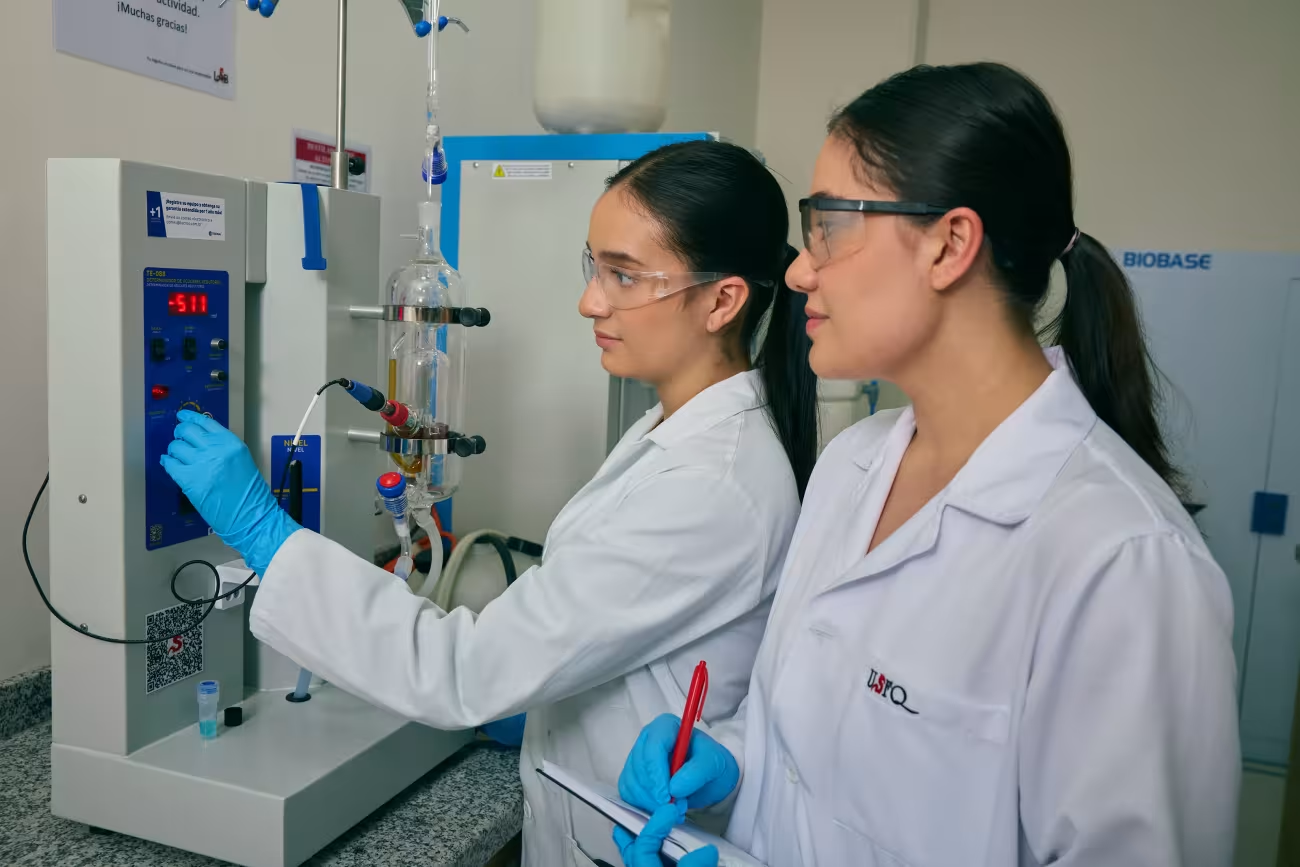
Food Engineering integrates chemistry, microbiology, industrial processes, innovation, and sensory analysis, among other disciplines. The Liberal Arts approach broadens your vision: you understand consumer behavior, regulation, communication, and the social impact of the foods you develop.
Beyond applying and mastering techniques, you understand how and why each stage of food production works.
USFQ Method
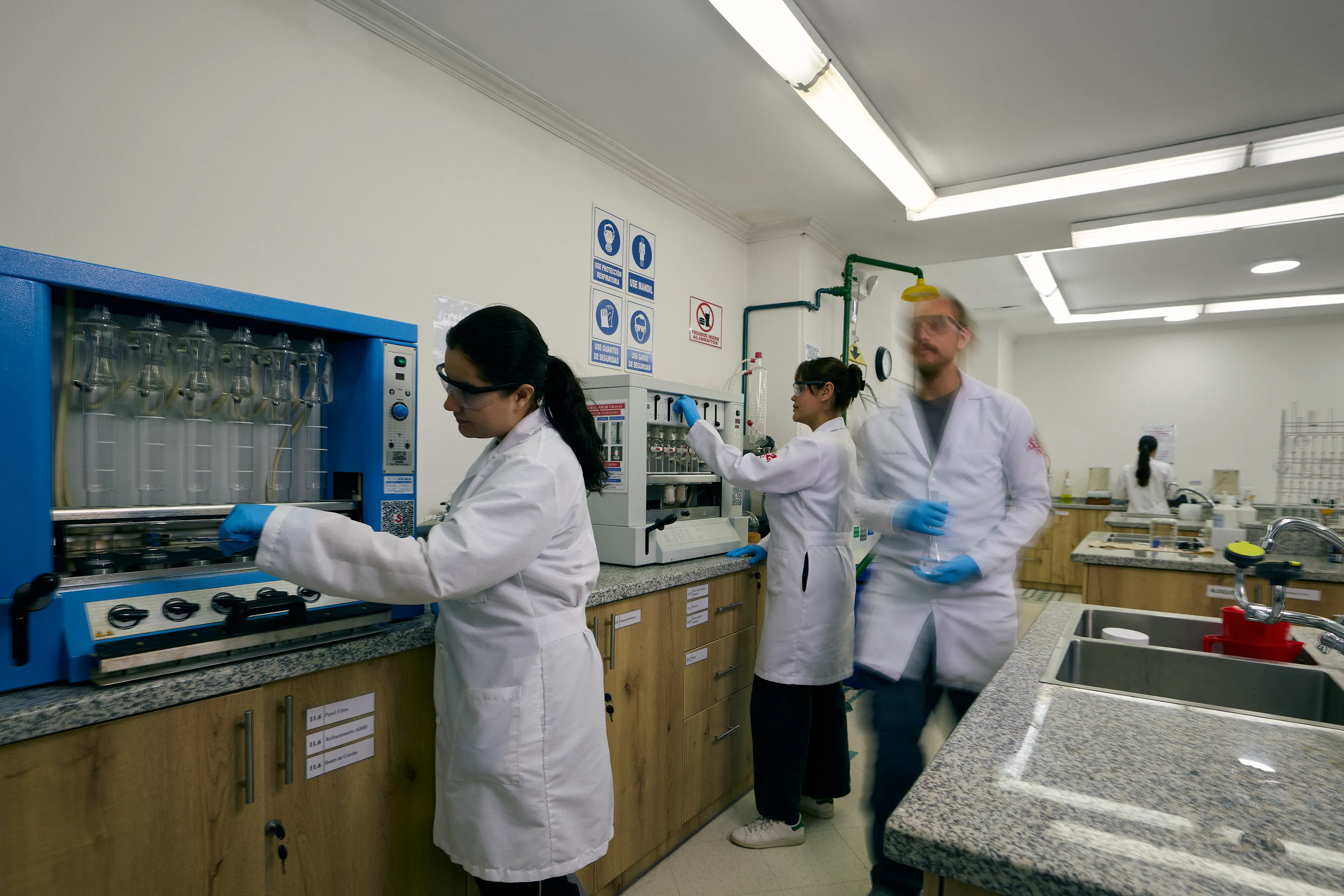
- The teaching model in Food Engineering combines theoretical training with a solid experimental foundation, carried out in laboratories and specialized spaces.
- Active learning is promoted through the use of case studies, applied projects, and real problem-solving. Methodologies such as problem-based learning (PBL) and project-based learning (PjBL) are applied, fostering critical thinking, autonomy, and creativity.
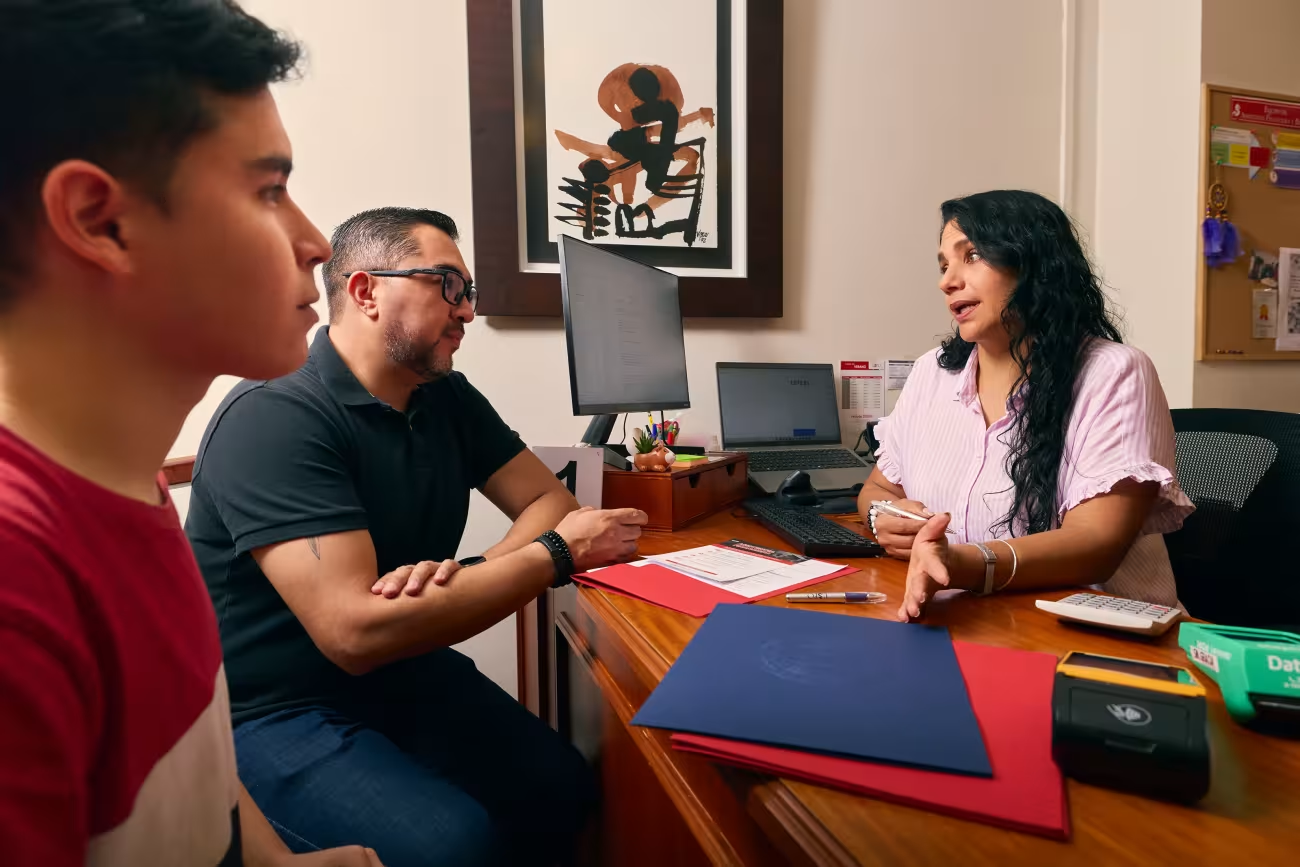
- Small group management allows for personalized attention and close monitoring of learning. In addition, teamwork is encouraged as a key competency for the professional environment, promoting collaboration, effective communication, and joint decision-making.
- Ongoing engagement with the industry takes place through three pillars: participation of experts in classes, technical visits, and collaboration on research projects or thesis work.
- This comprehensive approach prepares our students to face the challenges of the food industry with technical judgment, strategic vision, and a commitment to the country's development.
Products that transform the food industry
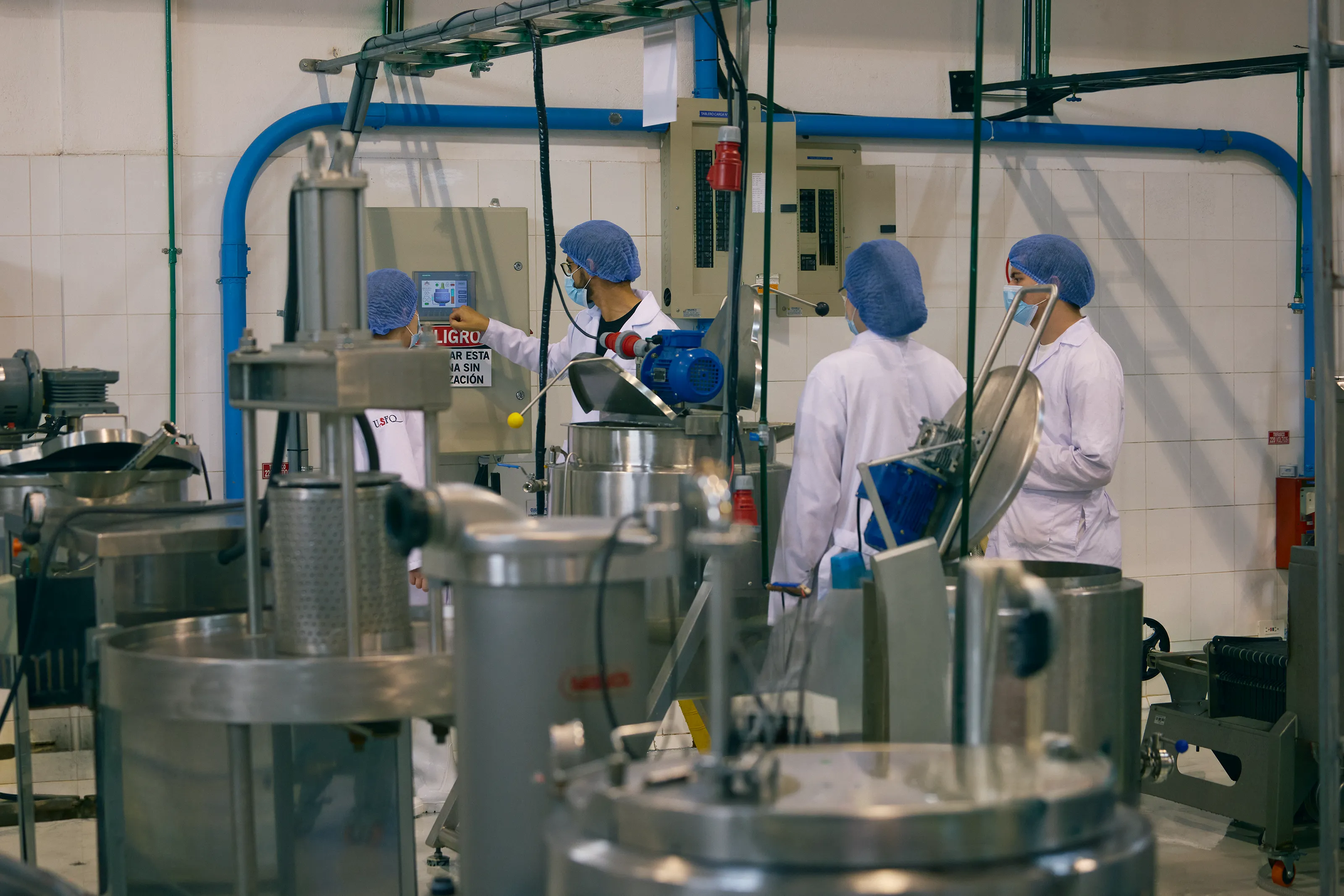
From the beginning of your career you analyze raw materials, formulate prototypes and design processes. Each project connects the classroom with the needs of consumers and businesses.
Your training is complemented by global experiences and innovation spaces that transform your knowledge of the food industry.
You graduate prepared to design, evaluate and improve processes at the technological and production level.
International Accreditation
Program Educational Objectives (PEO)
Engineering Professionals
PEO 1: Propose and implement solutions to address various problems in food industrialization, based on the fundamentals and tools of basic sciences, Food Engineering, and related fields, with a positive impact on food sovereignty.
Technical Skills and Values
PEO2: Lead multidisciplinary and collaborative projects through efficient teamwork, with an innovative vision, through product development and process improvement, contributing to the growth of the productive matrix and responding to national and international advances and needs, with social and environmental responsibility and ethics.
Continuous Learning
PEO3: Maintain a permanent update of knowledge through continuing education programs, professional development, graduate studies, and various training courses on diverse topics, both human and related to Food Engineering.
Professional Skills
PEO4: Develop their own businesses, be part of industry, research centers, or governmental entities, to creatively apply Food Engineering and solve societal problems.
Student Outcomes (SO)
SO1: Ability to identify, formulate, and solve complex engineering problems by applying principles of engineering, science, and mathematics.
SO 2: Ability to apply engineering design in the formulation of solutions that meet specific needs, taking into account public health, safety, and welfare, as well as global, cultural, social, environmental, and economic factors.
SO 3: Ability to communicate effectively with different audiences.
SO 4: Ability to recognize ethical and professional responsibilities in engineering situations and make informed judgments, considering the impact of engineering solutions in global, economic, environmental, and social contexts.
SO 5: Ability to function effectively in a team, where all members lead, create a collaborative and inclusive environment, set goals, plan tasks, and meet objectives.
SO 6: Ability to develop and conduct appropriate experiments, analyze and interpret data, and draw conclusions based on engineering criteria.
SO 7: Ability to acquire and apply new knowledge as needed, using appropriate learning strategies.

Stories that transcend the laboratory
Graduates work in food product research and development, quality control, food safety, innovation, research, process improvement, food processing, and their own entrepreneurial ventures.
Byron Perez is a postdoctoral researcher at ETH Zürich, where he works on sustainable food systems and bioprocessing of alternative biomasses. His international career has been consolidated primarily in Switzerland and Singapore, with contributions in microalgae, emerging processing technologies, and sustainable ingredients. His career began at USFQ, where he graduated as a Food Engineer (2019) and published two articles as an undergraduate alongside faculty researchers. He subsequently received the Excellence Scholarship & Opportunity Programme (ESOP) grant for master's and doctoral studies at ETH Zürich, receiving the ETH Medal 2023 for the excellence of his academic work. He currently collaborates on strategic food security projects with the Singapore ETH Centre, the National University of Singapore (NUS), A*STAR, and MIT. He has published 11 articles in Q1 scientific journals, most of them as first author, focused on bioprocessing of alternative biomasses, microalgae, and sustainable ingredients. The quality, rigor, and impact of his research have been recognized by the European Federation of Food Science and Technology (EFFoST), one of the leading scientific communities in the field in Europe. In 2022 he received the Master Student of the Year award, which distinguishes outstanding master's theses for their scientific excellence. In 2024 he received the GNT Young Scientist Award, a highly competitive European recognition for young researchers with outstanding contributions to the future of food science and technology.