Veterinary Medicine
Veterinarian
10 semesters
Credits:148
In-person
College of Health Sciences — COCSA
RPC-SO-04-No.080-2020
RPC-SO-24-No.404-2016
Campus Santiago Gangotena
Care for animal life with science and commitment
Studying Veterinary Medicine at USFQ trains you at the only university in the country with three veterinary specialty hospitals: equine, small species, and wildlife (Tueri). From the first year, you complete mandatory semester hours at the USFQ Teaching Hospital of Veterinary Specialties (HOSVET) for small species and gain early exposure to clinical and field work.
You learn in direct contact with patients and develop clinical judgment that integrates science, ethics, and an understanding of the connection between animal, human, and environmental health.
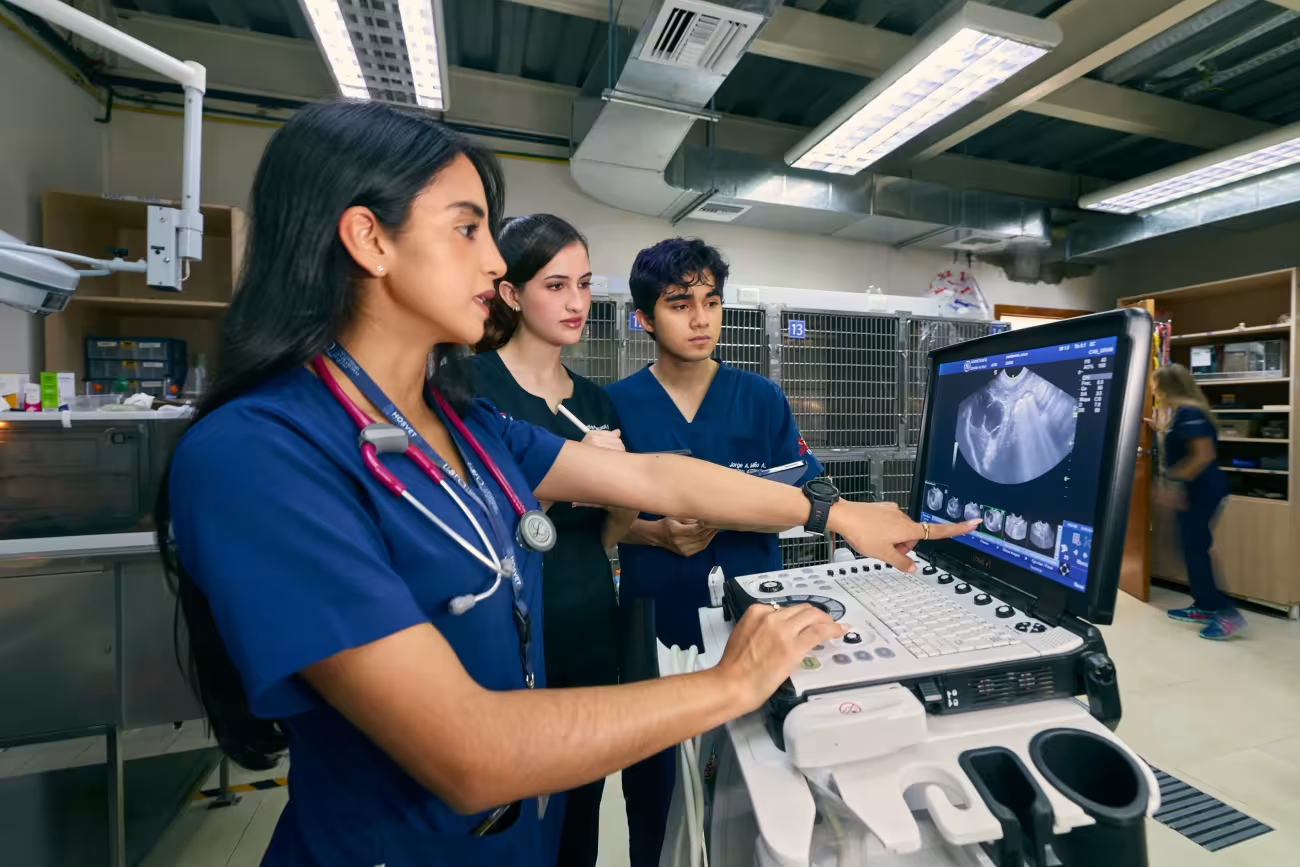
Form a comprehensive view of animal health
At USFQ, Veterinary Medicine is learned in the field, laboratory, and teaching hospitals with training in clinical practice, science, and experiences in productive environments from the first semesters.
The training incorporates animal welfare and the One Health approach, which recognizes the connection between animal, human, and environmental health. This allows you to understand, with an ethical perspective, the impact of animals on ecosystems, productive systems, and society.
The Liberal Arts approach broadens your veterinary outlook, helps you connect science with real-world contexts, and allows you to develop from the first semesters through early practice and the support of the academic team.
USFQ Method
Active learning — Dynamic classes with real case analysis and clinical simulations.
Discussion and critical thinking — We foster informed debate and scientific argumentation.
Veterinary communication — Academic writing and skills to communicate with colleagues, mentors, and communities.
Teamwork — Projects and rotations that develop leadership and interdisciplinary collaboration.
Integration with real practice — Clinical settings, laboratories, and communities from the first semesters.
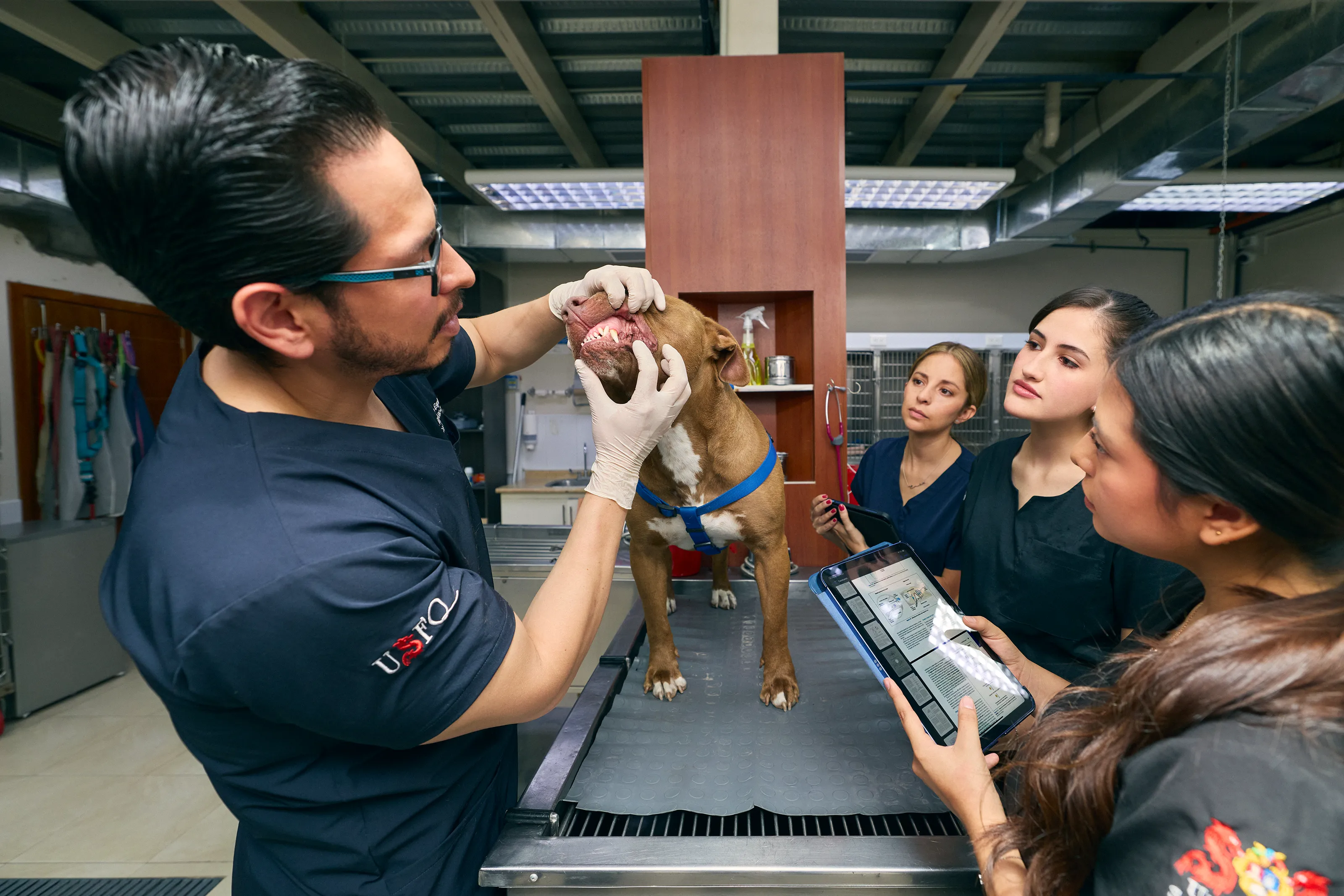
Clinical experience from the first semesters
From the beginning of your degree, you participate in patient care and complete a mandatory hospital program every semester, unique in the country, that guarantees continuous clinical practice.
You gain experience in clinical evaluations, sample collection, interpretation of results, and field trips as a structural part of your training. As you progress, you deepen your knowledge in surgery, internal medicine, reproduction, public health, wildlife, and sustainable production, connecting veterinary practice with the specific needs of the environment.
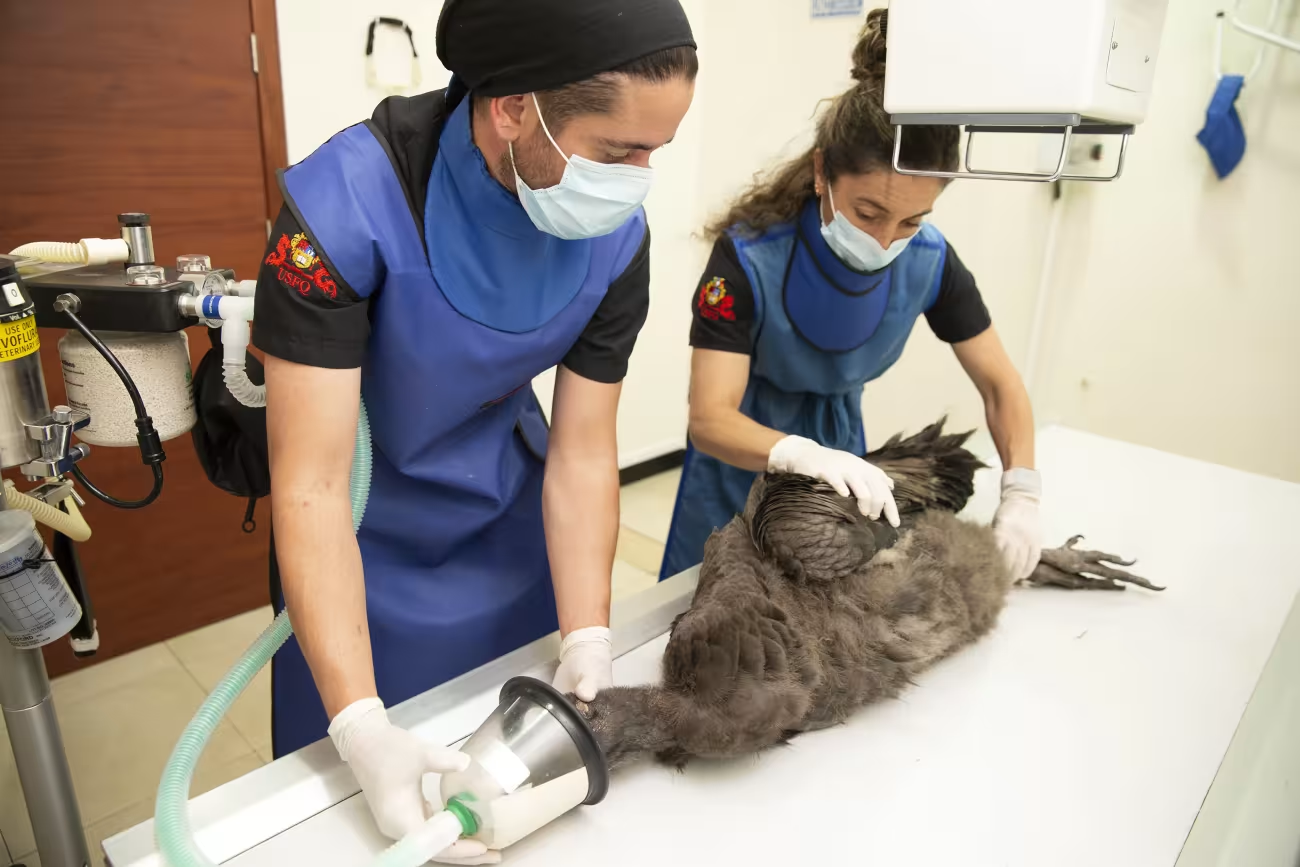
Applicant and Graduate Profile
Who is the program intended for?
For students interested in understanding animal health from a scientific and applied foundation, and its relationship with production, public health, and the environment.
What will your professional outlook be?
You will be trained to work in clinical practice, animal production, public health, conservation, and research, with versatile preparation adaptable to different professional contexts.

Scholarships
Talent needs space to grow.
During your admissions process you can apply for the scholarships offered by USFQ. These recognize academic merit, discipline, leadership and performance in different areas, and are designed to propel you from the start of your career.
Financial Assistance
Being educated with freedom also means having timely support.
USFQ offers financial assistance programs and personalized guidance so that your decision to study is clear, responsible, and achievable.
Contact Us
María Gabriela Arroyo Guarderas
Medical Director
Hospital de Equinos USFQ
Dean of the School of Veterinary Medicine
Professor of the College of Health Sciences
Office EE305
(+593 2) 297-1700
garroyo@usfq.edu.ec