Master's in Physics
Master's in Physics
2 years (4 regular terms)
Courses: 13
Credits:56
In-person
$10.193
Enrollment: $926
Tuition: $9.267
Program with full scholarships
Monday through Friday, between 7:00 AM and 6:00 PM.
January, 2027
February to November 2026 (subject to available spots)
College of Sciences and Engineering (Polytechnic)
RPC-SO-05-No.070-2018, January 31, 2018
Campus Santiago Gangotena
Understand the principles that govern nature
The USFQ Master's in Physics prepares you to analyze, model, and explain physical phenomena using mathematical, experimental, and computational tools.
You develop analytical precision, modeling capabilities, and scientific thinking to investigate complex problems that connect science, technology, and society.
Explore the laws of the universe with rigor, creativity, and freedom.
Program Objective
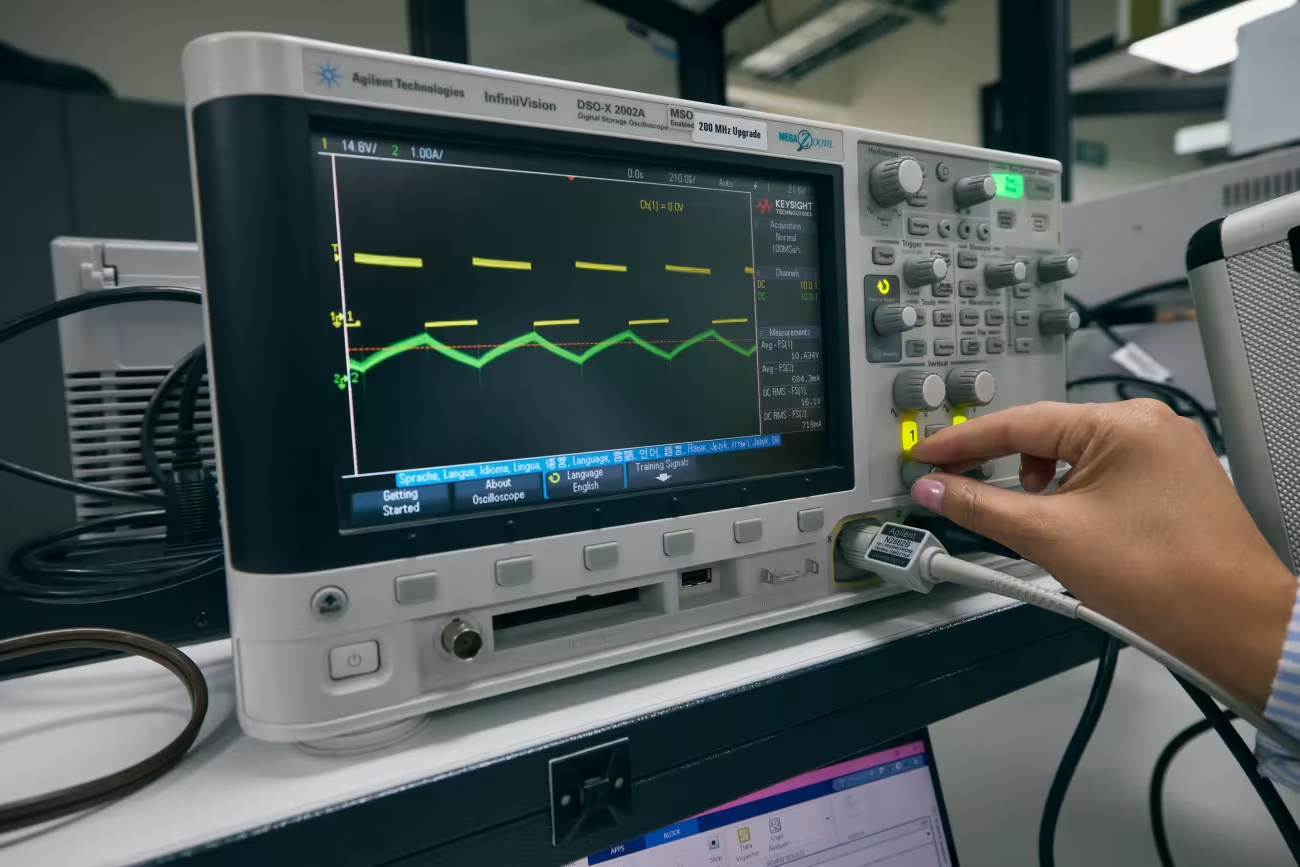
The master's degree provides you with the essential knowledge and tools to research, develop models, interpret data, and apply advanced analysis methods.
The program combines theory, experimentation, and simulation so that you can contribute to scientific, technological, and industrial development in local and international contexts.
Applicant and Graduate Profile
Who is this master's degree aimed at?
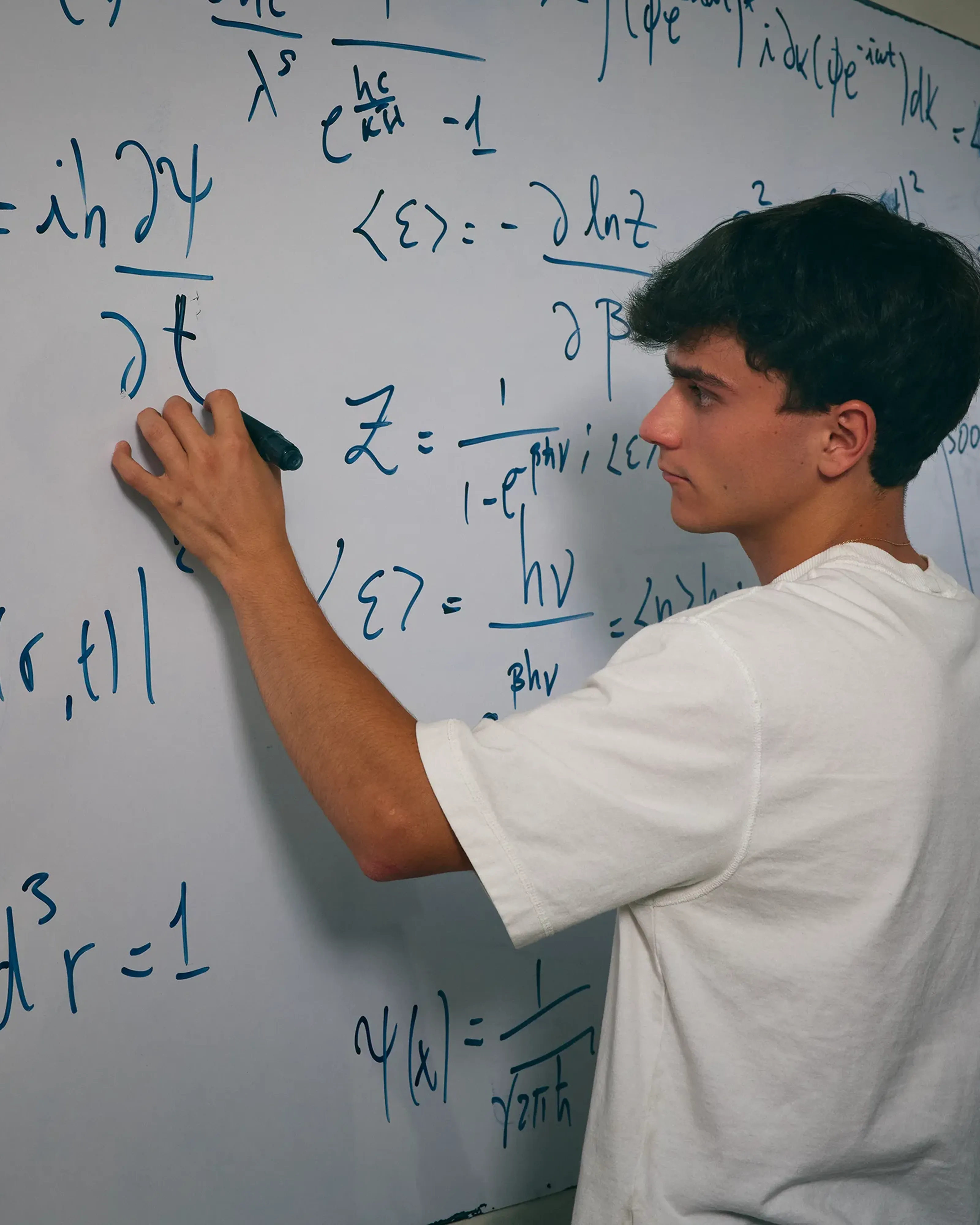
Professionals in physics, engineering, mathematics, or related sciences interested in specializing in the theory, research, and application of physical models.
It is also aimed at those seeking to contribute to the fields of science, technology, the environment, education, and production through rigorous, ethical, and creative scientific research.
What will your professional outlook be?
You will develop skills to research, work with data, and design applied models.
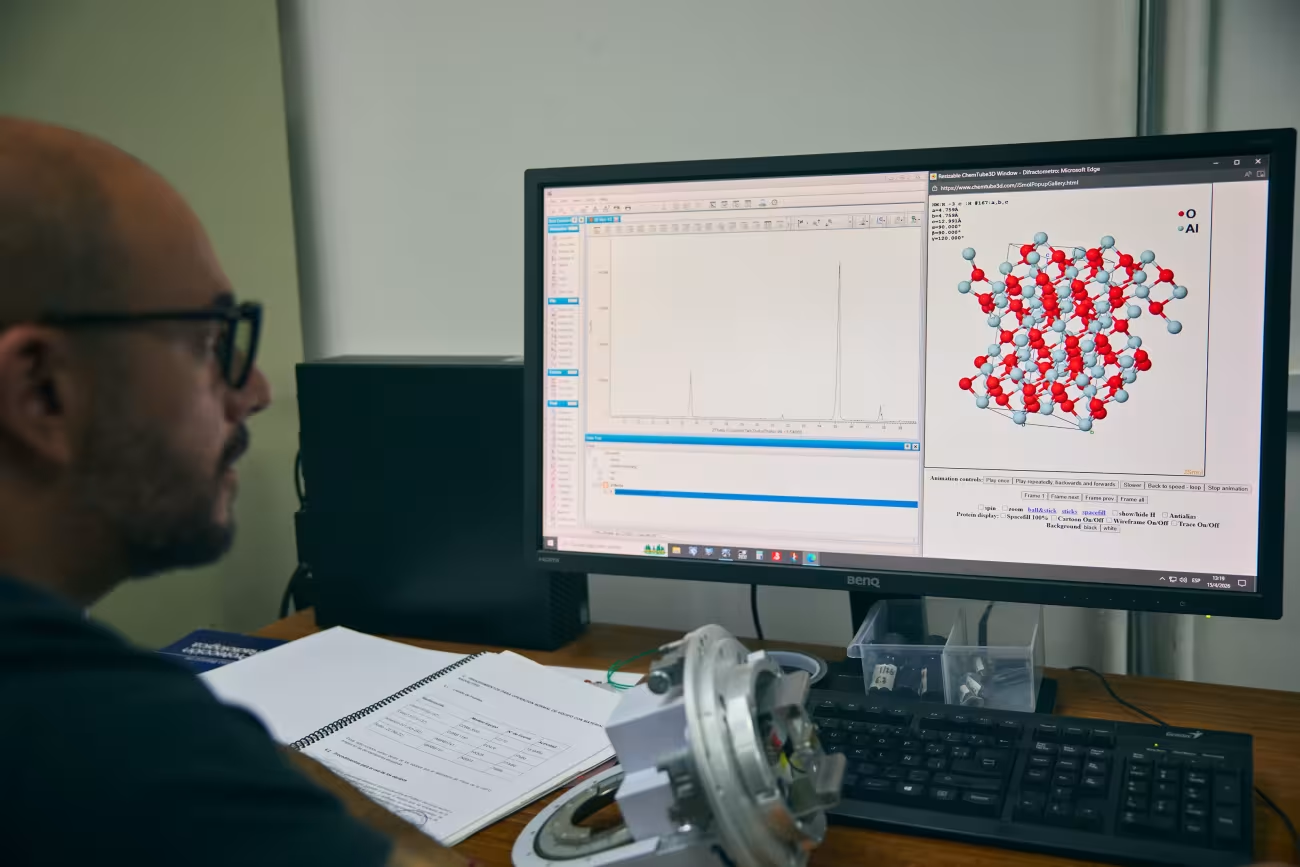
You will be able to work in research, technology, teaching, data science, industry, laboratories, or interdisciplinary projects.
In the Master's Program in Physics, you will be trained with the appropriate foundations to continue Ph.D. studies in Physics or related areas such as engineering and cutting-edge scientific fields. As a master's degree holder in physics, you will find a broad job market within the country's technological and higher education system.
Graduates will work in research, university teaching, the technology industry, data analysis, scientific consulting, and multidisciplinary projects. They will be distinguished by conceptual clarity, analytical ability, and applied scientific thinking.
Science with a human focus
The Liberal Arts model expands your professional training by connecting physics with mathematics, philosophy, technology, ethics, and communication. You understand science as an interdisciplinary field that engages with other forms of knowledge and contexts.
You learn to think beyond the formula: you interpret results, argue with rigor, and evaluate the scope of models in real-world situations.
Works in laboratories and builds scientific networks
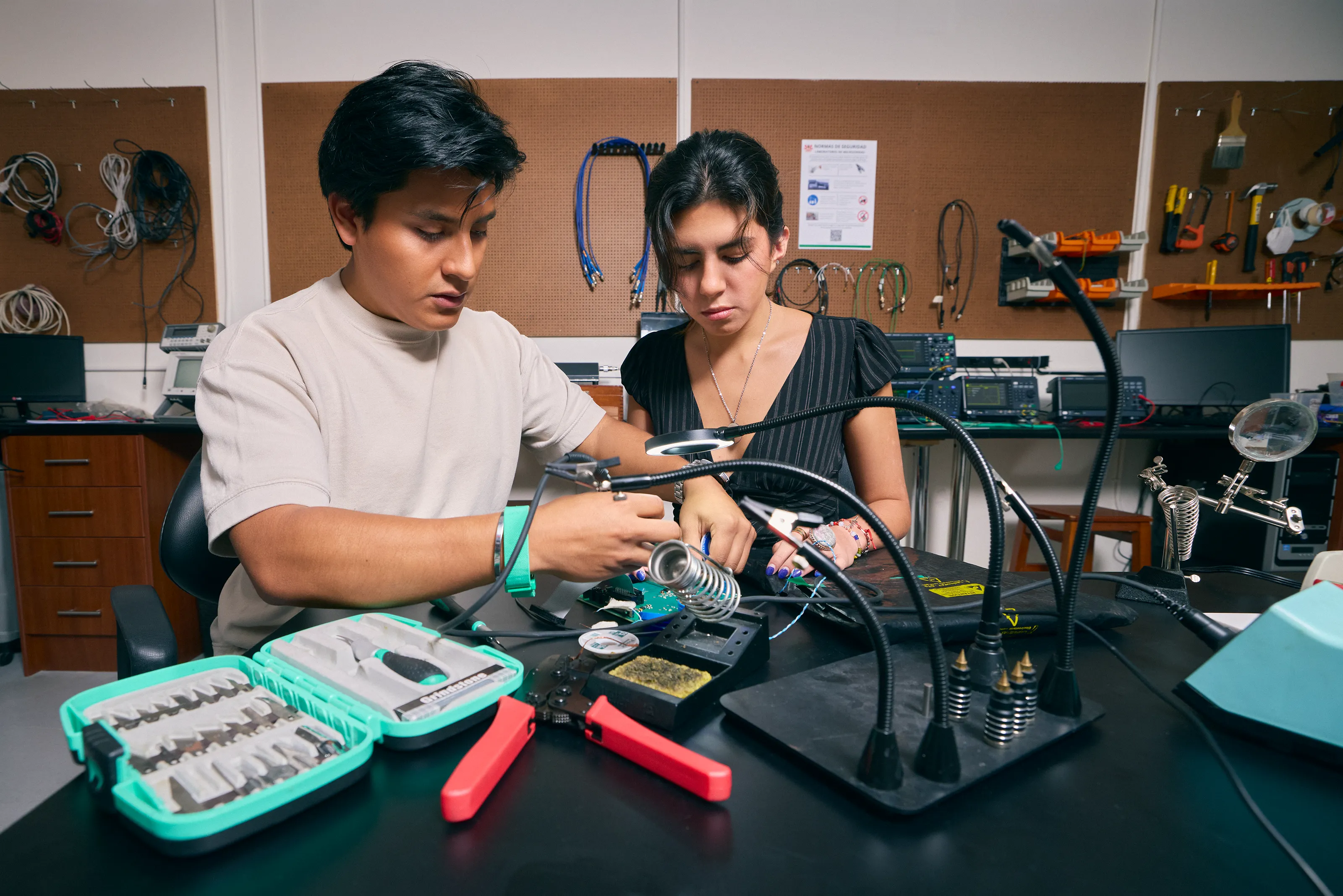
You access specialized laboratories and participate in interdisciplinary projects alongside professionals from different areas of science and engineering.
Includes
- Experimental physics laboratories.
- Theoretical and computational modeling.
- Applied science projects.
- Collaboration with international scientific institutions.