International Congress Freedom of Expression / Law and Literature
- Schedule
- 9:00 am - 5:00 pm
- Venue
- Universidad San Francisco de Quito
Event information
The congress seeks to articulate an open and heterogeneous Latin Americanist platform in which academics and students from different disciplines (law, literature, cultural studies, sociology, history, journalism, etc.) from the region and other latitudes, come together to exchange ideas on freedom of expression, from the connection between law and a broad conception of literature, including art and cultural studies.
General Information
The research groups "Intertextos entre el Derecho y la Literatura" and "Libertad de Expresión" of the Colegio de Jurisprudencia of the Universidad San Francisco de Quito, with the support of the Instituto de Investigaciones Jurídicas; the Secretaría de Estado de Cooperación Internacional y para Iberoamérica y el Caribe; the Facultad de Filología Española of the Universidad Autónoma de Barcelona; the Cátedra abierta de Derecho y Literatura of the Universidad Autónoma de Málaga; the Curso Abierto de Derechos Humanos y Arte of the Programa Andino de Derechos Humanos of the Universidad Andina Simón Bolívar; the Red Internacional de Investigación en Literatura y Derechos Humanos; the Rede Brasileira Direito e Literatura; and Freedom House, invite you to the International Congress "Freedom of Expression: Dialogues and Reflections from Law and Literature", to be held on June 20, 21, 22 and 23, 2018, in Quito, Ecuador.
The congress seeks to articulate an open and heterogeneous Latin Americanist platform in which academics and students from different disciplines (law, literature, cultural studies, sociology, history, journalism, etc.) from the region and other latitudes, come together to exchange ideas on freedom of expression, from the connection between law and a broad conception of literature, including art and cultural studies.
We invite the submission of individual papers or panel proposals in Spanish and Portuguese around the following topics, without these being exclusive of other related proposals:
- Literature as a tool for denunciation and protest against censorship.
- Violations of freedom of expression in Latin American dictatorships and democracies through literature, theater and cinema.
- Authorship rights as foundations of freedom of expression.
- Latin American intellectuals: denunciations and silences regarding state violations of freedom of expression.
- Feminist resistances: on women's freedom of expression within the patriarchal cultural canon.
- Cyberculture, cyberliterature and freedom of expression.
- Censorship and legislation: effects on literature and art.
- Literature in the courts: books and authors brought to the stand.
- The trial and the theater: violations of freedom of expression on stage.
- Persecution and exile: liminal responses to the lack of freedom of expression.
- Publishing markets and literary prizes: manipulations of freedom of expression?
- Ideologies vs. freedom of expression in Latin American writing.
- Historical memory and legal reparation through literary and cultural texts.
- Theater and political denunciation: resistance and freedom of expression.
- Literary journals and their defense of freedom of expression.
- Expressions of silenced bodies: sexual dissidences (LGBTI and queer) in literature and art.
- Oral literatures and other ancestral textualities: forms of expression of indigenous and Afro peoples/subjects.
- Paraliterary genres (letters, diaries, etc.) and journalistic genres: their importance in the defense of freedom of expression.
- Literature in the Inter-American Human Rights System.
- The Cold War and its cultural impact on freedom of expression in Latin America.
- Disabilities, functional diversity and new ways of exercising freedom of expression.
- Freedom of expression in performing arts, music and film.
- Literature and bioethics: ways of thinking about free expression of the body.
Submission of Papers and Panels
How should I submit an individual paper?
- An abstract of a maximum of 300 words must be written that briefly and clearly summarizes the topic to be developed. A title, 5 keywords, the email address and affiliation of the presenter must also be included.
- An abstract may have more than two authors but no more than five.
- It must be sent to literaturayderecho@usfq.edu.ec
- Submitting an individual paper abstract does not imply its acceptance. Acceptance will be communicated in March.
How should I submit a panel?
- A title and abstract of the panel of a maximum of 300 words must be included. The title of each paper as well as the email address and affiliation of each presenter must also be included.
- It must be sent to literaturayderecho@usfq.edu.ec
- Submitting a panel proposal abstract does not imply its acceptance. Acceptance will be communicated in March.
Important Dates
Deadline for submission of proposals: March 15, 2018
Notification of accepted/not accepted papers: March 31, 2018
Submission of preliminary program: April 15, 2018
Submission of final program: May 15, 2018
Congress dates: June 20, 21, 22 and 23, 2018
Logistics
VENUE
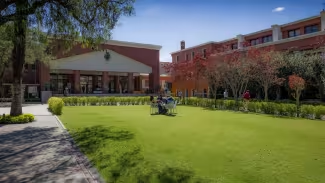
Founded in 1988, the Universidad San Francisco de Quito (USFQ) is an Ecuadorian Liberal Arts university located in Cumbayá, one of the valleys adjacent to the city of Quito. The University bases its academic work on broad teaching, research and creativity with a committed and qualified team of professors, researchers and administrative staff, with 967 professors and administrative staff, 10 academic colleges and schools and 51 programs. Its policy is the responsible use of resources.
USFQ is currently the highest-ranked University in Ecuador and holds the #57 place in Latin America (according to the QS Latin American University Ranking). Across its different campuses, 8,400 undergraduate and graduate students from more than 80 nationalities and countries study and conduct research, along with 900 international students and 500 indigenous students, as part of its plural and critical vision of the country.
HOW TO GET THERE
Diego de Robles y Vía Interoceánica Postal Code 170157
ACCOMMODATION
Holliday Inn Express Quito
Address: Ave. Orellana N6-54 Y Calle Reina Victoria
Website
Hotel Cumbayá
Address: García moreno E-15 y Chimborazo
Website
Stubel Suites and Café
Address: Pasaje Stubel Nro. 1, Calle Rafel León Larrea
Website
Hotel Sumak Kay
Address: Calle Maquiavelo E6-157 y Av. Siena.
Website
Hotel Sheraton
Av. República de El Salvador N36-212 y Av. Naciones Unidas
Website
Hotel Rukka Lodge
Francisco de Orellana Oe3-242 y Rodrigo de Núñez.
Website
Hotel Dann Carlton
Avenida República de El Salvador N34-377 e Irlanda
Website
Contact: veronica.mera@danncarltonquito.com
* When making your accommodation reservation, please inform them that you will be attending the Congress at the Universidad San Francisco de Quito so that preferential rates may be applied
Costs
Payment for the certificate can be made by bank transfer, deposit or credit card.
International presenters USD 100
National presenters USD 80
Attendees with certificate USD 30
Attendees without certificate USD 10
Ways to participate
There are two ways to participate: as presenters and as listeners.
Presenters: present a research paper and participate in all academic and social activities of the Congress. They will also receive the congress materials and the respective participation diplomas.
Listeners: may attend all academic activities; however, they will not receive the congress materials nor the volume that will compile the papers presented during the sessions.