Governance - Authorities
Leadership that drives institutional development
Universidad San Francisco de Quito USFQ has a team of authorities that guides the academic, strategic and administrative development of the institution. Their leadership strengthens university excellence, promotes innovation and ensures compliance with the mission, vision and founding principles of USFQ.
Those Who Lead the Way at USFQ
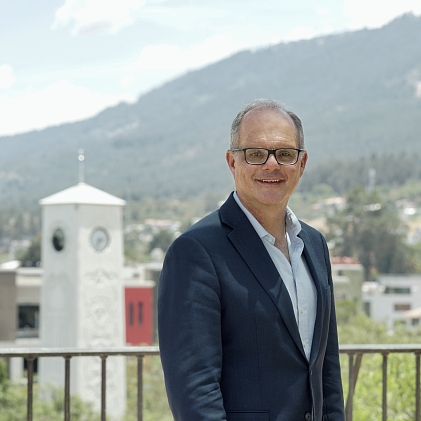
Diego Quiroga Ferri
Diego has led the Research and International Programs departments at Universidad San Francisco de Quito (USFQ) for more than 10 years, driving its positioning as the No. 1 University in Internationalization in Latin America according to Times Higher Education; he served as Dean of Research and International Programs and co-directed the Galapagos Institute for the Arts and Sciences (GAIAS). He obtained his Ph.D. in Anthropology from the University of Illinois at Urbana-Champaign and his research areas include Urban Ecology, Political Ecology and Medical Anthropology in regions such as Galapagos, the Amazon and the Andes, with a focus on biodiversity, vulnerability and traditional medicine. Diego maintains that universities must integrate into the innovation ecosystem, respond to community needs, influence public policy and support the private sector, basing his philosophy on Liberal Arts and multidisciplinary work to enhance research.
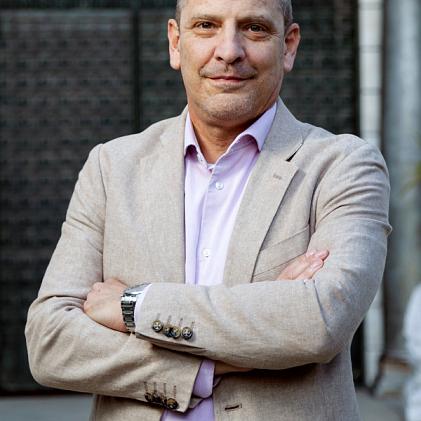
Cesar Zambrano
César Zambrano earned his PhD in Inorganic Chemistry from Purdue University (United States). He holds a Bachelor's degree in Chemistry from Maryville College (United States). He is the Dean of Research at Universidad San Francisco de Quito (Ecuador). He also served as Associate Dean and Dean of Sciences and Engineering. He is a member of the Research Committee and Coordinator of the Arquímedes Scholarship Program. He is a professor in the Chemical Engineering Program at the College of Sciences and Engineering. His academic and research work has focused on the area of supramolecular chemistry, organic synthesis of molecular capsule precursors, and organometallic and coordination polymers. He is the founder of the scientific journal "Avances en Ciencias e Ingenierías." He has experience in areas such as computational and organometallic chemistry.
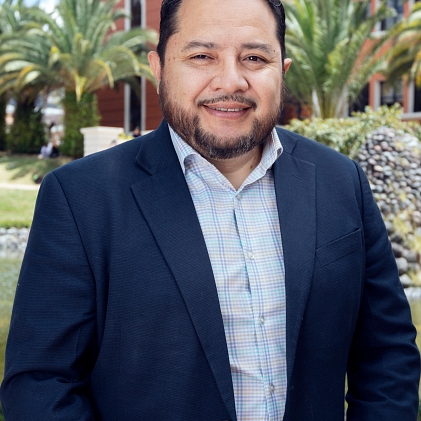
Carlos Fernando Mena
Carlos F. Mena holds a PhD in Geography from the University of North Carolina at Chapel Hill (United States) and an MSc in Environmental Sciences from Florida International University (United States). He is a geographic and environmental engineer from the Escuela Politécnica del Ejército (Ecuador). He is Director of the Universidad San Francisco de Quito Galápagos Extension and Co-Director of the Galapagos Science Center (GSC). Additionally, at the same university, he is a professor of Geographic Information Systems and directs the Institute of Geography. His research interests encompass social-environmental systems, population and environment, land use change and tropical deforestation, and spatially explicit complex models (cellular automata, agent-based models, remote sensing, and digital image processing). His areas of expertise include the human dimensions of global environmental change and geographic information science.
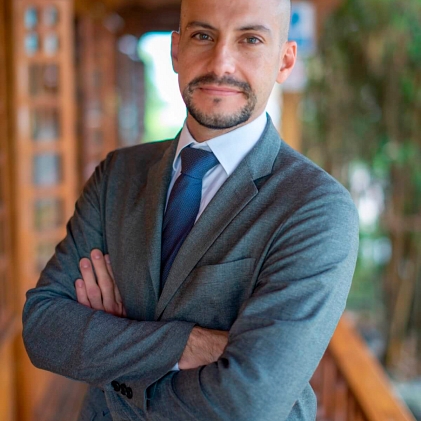
Damián Ramia Yépez
Damián Ramia holds a Master's degree in Hospitality Management from Cornell University in Ithaca (NY, United States), with a specialization in Revenue Management. He holds a Bachelor's degree in International Business and has advanced studies in Economics, Business Administration, Marketing and Languages. He joined Universidad San Francisco de Quito (Ecuador) as Director of the Hospitality Program. After the successful design and implementation of several projects, he was appointed Dean of the College of Hospitality, Culinary Arts and Tourism, where he teaches Revenue Management and Hotel Marketing. He has been a consultant for companies such as Marriott International, Hotel Quito, Asesoría Profesional Hotelera and Intercontinental Hotels. He was a certified Internet Marketing consultant in Toronto and Vice President for Latin America of M3-Social Mindz, a company specializing in Web Solutions, Social Marketing, Conversion Architecture and Custom Applications.
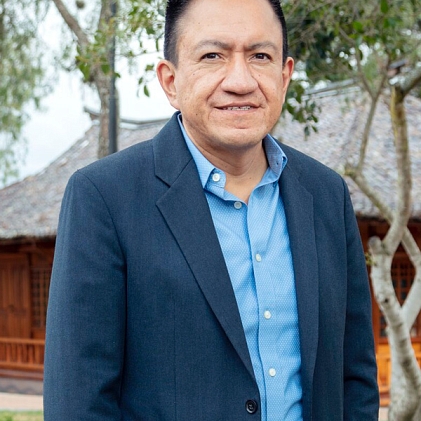
Mauricio Cepeda
Mauricio Cepeda holds a Master's in Hospitality Management from Cornell University (United States) and two Bachelor's degrees from Universidad San Francisco de Quito (USFQ, Ecuador): Finance and Business Administration and Culinary Arts. He serves as Chief Financial and Administrative Officer at USFQ, where he is also a professor. He was Dean of the College of Hospitality and Culinary Arts and Executive Director and General Manager of San Francisco Foodservice, where he managed six food and beverage outlets and a catering service. Among his skills and strengths, he has extensive knowledge and experience in hospitality and service companies, strong business and quantitative skills such as strategic thinking, teamwork ability and leadership. He has experience in areas such as food and beverage management, hotels, restaurants, finance, hospitality marketing and sommelier.
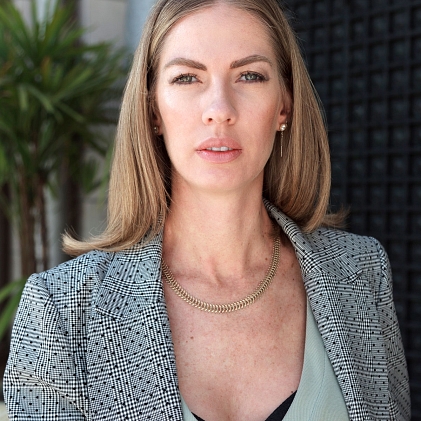
Alexandra Velasco Hornby
Alexandra Velasco holds a Doctorate in Education with a focus on Organizational Leadership from Northeastern University (United States). She also holds an MBA in Sustainability and Innovation from the University of Oregon (United States). She is the Director of Internationalization at Universidad San Francisco de Quito (USFQ, Ecuador), where she analyzes the strategy for international development programs and fundraising. She founded and manages GAIAS Europa, USFQ's hub in Spain, which connects the Americas and Europe on academic and research topics. At USFQ, she launched the Office of Innovation and Sustainability and the Smart Campus Group for more efficient management of the university's resources, which secured the AASHE STARS Sustainability accreditation, making it the first campus in South America to obtain it. She has secured external funding, such as the IDB-WISE Women's Entrepreneurship in Science project.
Rector's Office
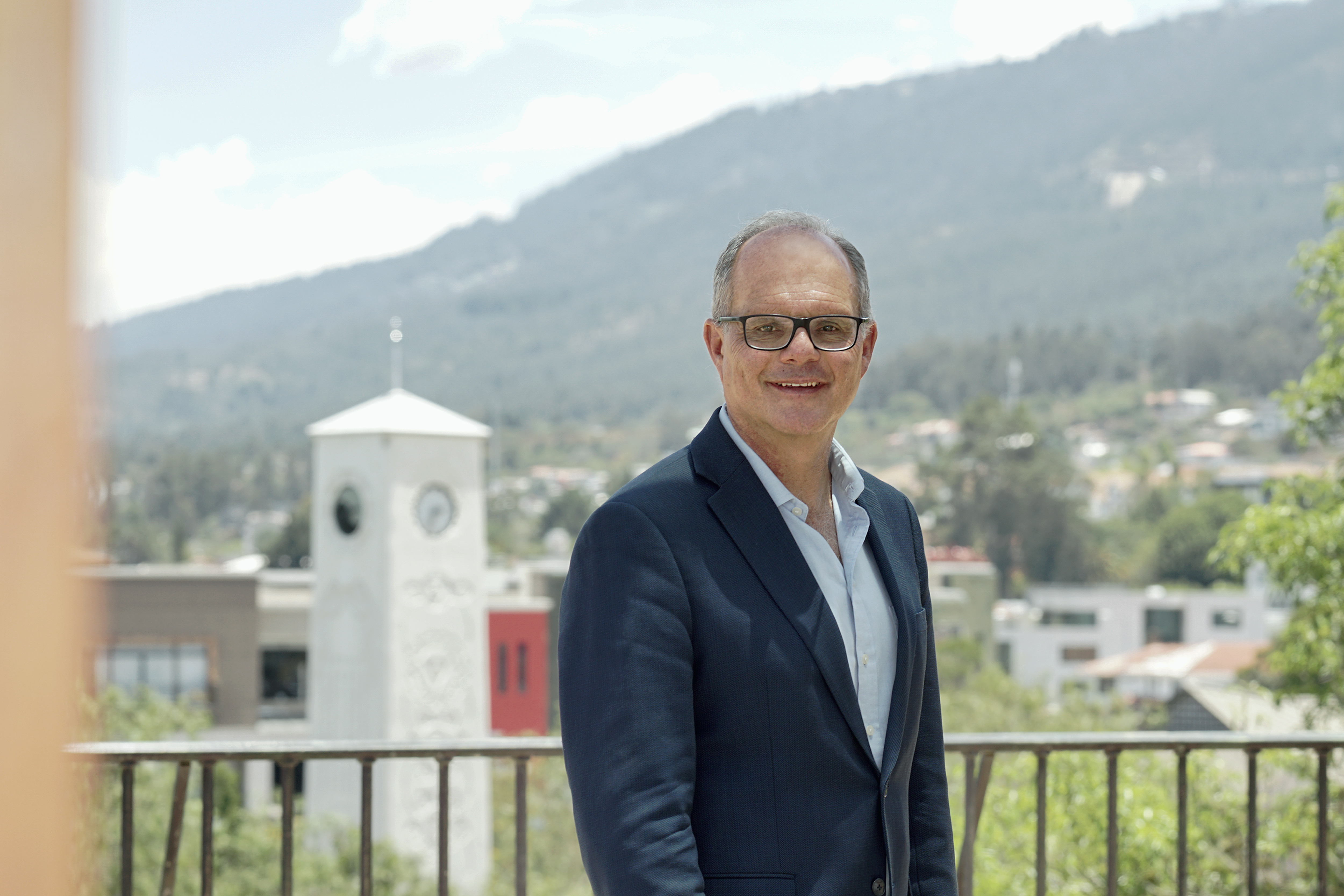
Diego Quiroga Ferri, rector
Anthropologist with a Ph.D. from the University of Illinois, Diego Quiroga Ferri has dedicated his academic career to studying the relationships between people, nature, and sustainability. His leadership drives a university that integrates research, internationalization, and innovation under the Liberal Arts philosophy.
Before taking on the rectorship, he served as Dean of Research and International Programs and co-directed the Galapagos Institute for the Arts and Sciences (GAIAS), from which he promoted the international projection of USFQ and consolidated its leadership in interdisciplinary research.
Among his main contributions is the positioning of USFQ as the number one university in Ecuador in internationalization and one of the leading institutions in Latin America, according to the Times Higher Education.
Research lines
- Political ecology.
- Medical anthropology.
- Studies on the Galápagos Islands, the Amazon, and the Andes.
"Our strength lies in educating with harmony and freedom, forming creative and entrepreneurial human beings prepared to understand and transform the world."
Strategic areas
The authorities of USFQ work in a coordinated manner in strategic areas that drive institutional development, strengthen academic excellence, and guarantee a quality university experience.
Each area comprises different axes aligned with the objectives of USFQ.