
International Congress Journalism in Debate 2019
Event information
Due to the health emergency caused by covid-19 in Ecuador, the Border Journalism Contest is postponed as follows:
Submission of applications until October 30, 2020.
The Journalism area of the College of Communication and Contemporary Arts at USFQ will hold the ninth edition of the country's largest journalistic event "Periodismo en Debate" on November 14, 15 and 16, 2019 at the Shakespeare Theater at USFQ located at Paseo San Francisco in Cumbayá, Quito.
This new cycle of conferences has as its central theme "21ST CENTURY JOURNALISTIC FORMATS in defense of human rights". This congress responds to the need to develop new formats for journalism and the vindication of traditional formats such as chronicles and long-form reports in the coverage of topics related to human rights such as domestic violence, femicide, xenophobia, migration, sexual abuse, among others.
About PerDebate
Periodismo en Debate is an international congress organized by the journalism program of the College of Communication and Contemporary Arts (COCOA) of the Universidad San Francisco de Quito, in Ecuador. PerDebate is a space for discussion of trends in the profession in Latin America and the rest of the world. The congress addresses the challenges of journalism with prominent national and international speakers on a main theme set for each event. The first meeting was held in 2009 and since 2012 it takes place every year in November. In 2019, it will be the ninth edition.
Previous editions of PerDebate have featured international academics such as Rosental Alves, director of the Knight Center for Journalism in the Americas; Al Tompkins, multimedia specialist at the Poynter Institute; Susan Benesch, world expert on dangerous speech from Harvard University; Robert Hernández, pioneer of web journalism from the University of Southern California, among others. Distinguished professionals have also participated, such as Cécile Mégie, director of Radio France Internationale; Mukul Devichand, director of BBC Hacks and BBC Trending; Cristoph Geiseler, CEO and founder of Seenfire; Emmanuel Colombié, Director of the Americas bureau of Reporters Without Borders (RSF), among many more.
Objectives
General objective
To discuss new formats and trends in journalism in the coverage of topics related to human rights, violence, vulnerable groups, migration, among others.
Specific objectives
- To deepen the practice of journalism in the coverage of topics related to human rights.
- To discuss technological innovations and new multimedia formats, transversal axes to current journalistic practice.
- To learn to produce journalistic content beyond crime reporting and routine news stories.
- To develop connections between the political, media and citizen worlds in defense of human rights.
- To analyze new journalistic narratives adapted to social networks and digital platforms such as Instagram, Facebook and Live.
Aimed at
- Professionals in the field of communication and journalism.
- Experts in public policy and risk management.
- University students.
- Academic and research community.
- Those interested in new communication technologies and social networks.
- Human rights activists.
International speakers
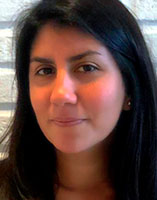 Belén Arce
Global communications and research coordinator for Chicas Poderosas
She has more than 10 years of experience in journalism, advocacy and communication related to social issues, human rights and migration. She has worked at UNICEF; the UN Refugee Agency (UNHCR), and Médecins Sans Frontières, and was a reporter and editor at the Buenos Aires Herald and BRIGHT Magazine. She holds a degree in International Relations from the Universidad de San Andrés and completed a Master's degree in International Affairs at The New School in New York on a Fulbright scholarship. Belén is a Chicas Poderosas Ambassador in Argentina and coordinates the communication and editorial production efforts of Chicas Poderosas at a global level.
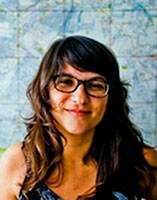 Paula Daibert
Senior producer for AJ+ in Spanish, Mexico.
She founded AJ+ Español in 2014, Al Jazeera's new digital video project in Spanish, which covers the untold human stories and conversations that matter to young Latin Americans. She is currently the senior producer of this outlet. Before joining AJ, she covered the social impacts of the World Cup in Brazil. From Front Line Defenders, she produced a web series about 11 human rights defenders threatened with death, as well as live mobile broadcasts of the 2013 and 2014 protests in her country. She has collaborated as a reporter for Thomson Reuters Foundation, BBC and O Globo. Paula specializes in social justice and identity issues, especially the diverse struggles of indigenous peoples in Latin America.
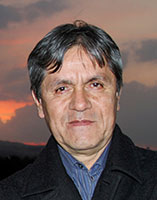 Jorge Luis Sierra
Cybersecurity consultant for journalists, Texas
Jorge Luis leads the Border Center for Journalists and Bloggers, a nonprofit organization dedicated to promoting investigative journalism in border areas. Jorge Luis created salama.io, an application that performs risk analysis for journalists. As a fellow at the International Center for Journalists, he developed digital projects in Latin America and the Middle East. He is a specialist in Google tools for data mining and visualization and has studied Cybersecurity at the universities of Texas Rio Grande Valley, Harvard and Colorado-Springs.
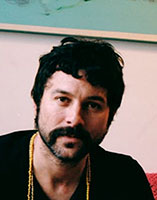 Nicolás Vallejo
Co-founder and creative director of Mutante, Colombia
Based in Bogotá, Mutante was born in 2017 as an experimental communication project that combines investigative journalism, new digital narratives and citizen activism to engage audiences in an exercise they have called "social conversation": an editorial methodology where citizens and organizations can use social networks to talk, understand and act on urgent issues such as sexual violence. Previously, Vallejo was editor of Noisey, part of Vice, in Colombia. He currently also co-directs Mamífera, a cultural center focused on offering experiences to learn to improve relationships with ourselves, with others and with the planet. He was the creator of ¡PACIFISTA!, the first outlet entirely dedicated to covering war and peace in his country.
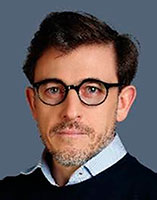 Jean-Christophe Gérard
Security director of the France Médias Monde group, France.
Following the murder of two members of Radio France Internationale in Kidal (northern Mali) in 2017, Jean-Christophe Gérard was appointed security director of France Médias Monde. His role is to prepare the group's newsrooms and their leadership to carry out coverage in dangerous areas. A former senior officer, Gérard worked for 27 years in the Ministry of Defense, with field missions in Africa, the Near and Middle East, Central Asia and South America. He was head of the operations office of the French Special Forces and has worked regularly with the French Foreign Ministry. He has served as advisor to the Chief of Staff in Niger.
 Clàudia Prat
International innovator in the fields of documentary, journalism and virtual reality. Based in New York, Clàudia has produced immersive stories for Associated Press, New York Times, BBC, Al Jazeera and Univision. In parallel, she provided media training to human rights defenders as part of the nonprofit project New Media Advocacy. She is currently working for TIME's immersive team.
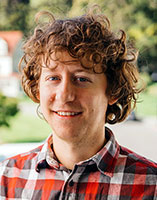 Ben Kreimer
Independent journalism technologist who tells stories with drones, virtual reality, 360° video, spatial audio, 3D reconstructions and open-source sensor platforms. He helps storytellers, organizations and mission-driven projects harness these emerging technologies to tell stories and amplify their work. Ben introduced 360° video to BuzzFeed as a Beta Fellow in its Open Lab, a media research and development space. He co-produced many of BuzzFeed's 360° videos, including the first one, which received more than six million views.
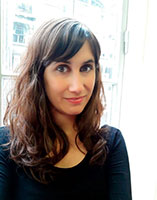 Belén Wildner
Political scientist (UCA) and head of the projects division at the Regional Office for Latin America and the Caribbean of the International Federation of Journalists (IFJ), an organization that promotes training and institutional development activities for journalists' organizations in the region. She is also a master's student in Latin American Studies at the Universidad Nacional de San Martín (CEL / UNSAM) and has completed various postgraduate courses on digitalization, the digital economy and the world of work, a priority research topic for the IFJ.
National speakers
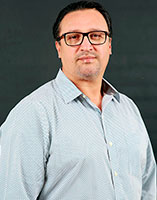 Arturo Torres
Co-founder of the portal Código Vidrio
He was editor-in-chief of the newspaper El Comercio and founded the investigative journalism portal Código Vidrio. He is a member of the International Consortium of Investigative Journalists (ICIJ). He was part of the team that investigated the Panama Papers and won the Pulitzer Prize. He also won the first prize in the IPYS - Tilac Best Investigative Journalism in Latin America Competition (2004), and published the book El juego del camaleón: los secretos de Angostura (PTEG).
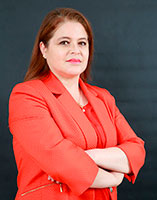 María Belén Arroyo
Political editor of Vistazo magazine
She worked at the newspapers El Comercio and El Universo. She has been a fellow of the Gabriel García Márquez New Ibero-American Journalism Foundation. Her journalistic research has earned several national and international awards. She is political editor of Vistazo magazine and co-founder of the portal Código Vidrio.
 Sol Borja
Associate editor of the GK portal
Journalist with experience in television, print media and digital outlets. She has published in the newspaper The New York Times and the magazines Mundo Diners and Soho Ecuador. She has collaborated with international media such as CNN en Español, DW and CGTN America. She is currently associate editor of the Gk portal. She is part of the collective Periodistas Sin Cadenas that produced the investigative report "Frontera Cautiva," a finalist for the GABO 2019 awards.
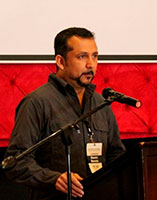 Dimitri Barreto
Macro-editor of the newspaper El Comercio
He has practiced journalism since 1996. He holds a degree in Social Communication from the Universidad Internacional del Ecuador. He has a diploma from the Universidad Autónoma de México (UNAM) on coverage of organized crime, delinquency and violence. He has worked at the newspaper El Comercio for 16 years. He was editor of the Quito and Security sections, and today is the newspaper's macro-editor.
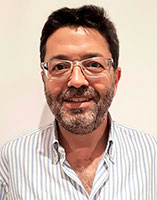
Elías Levy Benarroch
Director of the EFE Agency in Ecuador
Known as the Safari journalist, he is one of the journalists who knows Israel and the Middle East conflict best. He has studied the subject seriously, has seen it firsthand, and has taught it to dozens of colleagues and students from various parts of the world who attend his courses or conferences. He currently directs the Spanish news agency EFE in Ecuador.
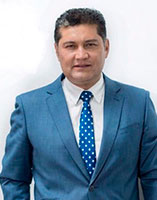 Freddy Paredes
Journalist at Teleamazonas
He is a reporter for the 24 Horas newscast on the national television channel Teleamazonas and host of its Sunday broadcast. Announcer for Notimiundo, a program on radio FM Mundo 98.1fm. He also conducts media training and political communication. He was physically assaulted and injured with stones during the national strike of October 2019 in Quito.
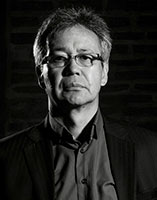 José Hernández
Director of the 4Pelagatos portal
Colombian journalist based in Ecuador for more than two decades. He was general editor of the newspapers El Comercio and Hoy, where he led a redesign and journalistic concept overhaul. He founded the weekly analysis magazine Vanguardia and today directs the digital opinion journalism portal 4Pelagatos.
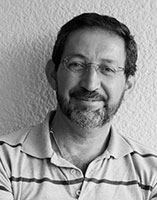 Juan Carlos Calderón
Director of the digital magazine Plan V
Distinguished Ecuadorian investigative journalist. He was editor of the investigative supplement Blanco y Negro of the newspaper Hoy, general editor of the newspaper Expreso and of the weekly magazine Vanguardia. He is co-author of the book "El Gran Hermano," which reveals a series of contracts between Fabricio Correa, brother of former president Rafael Correa, and the State during his administration. After the closure of Vanguardia in 2013, he founded the digital magazine Plan V, which in 2019 celebrates 6 years on the Internet.
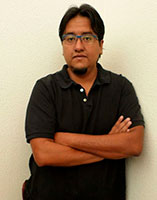 Alexis Serrano
General Editor of Diario La Hora
He is a journalism alumnus of Universidad San Francisco de Quito (USFQ). Today he is general editor of the newspaper La Hora. He has also published in magazines such as SoHo Ecuador and Mundo Diners. He won the national Eugenio Espejo award (2018) from the National Union of Journalists with his chronicle "Horror en el sexto C," about the rape of 41 children at the Aampetra academy; and third place in the national Jorge Mantilla Ortega award (2013) for his chronicle "Togro, el alimento que tumbó al dólar."
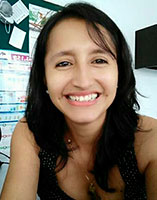 Marjorie Ortiz
Research Coordinator at Diario El Universo.
Journalist at the newspaper El Universo, she received the Fundamedios 2011 award in the investigative journalism category for a series of reports related to the contracts made by Ricardo Antón at the National Transit Agency. Her work "Export of shark fins with the country's permission" won the Andean Biodiversity Award in Spain, among other recognitions.
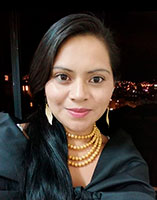 Aliwa Pazmiño
National Federation of Journalists of Imbabura
Social communicator with a master's degree in Cultural Studies. She participated in the postgraduate course taught at Flacso (Argentina) on digitalization and the world of work, rights perspectives for Latin America. Due to her strong performance, she was the only Ecuadorian to receive a scholarship to participate in an international meeting held in the Dominican Republic. The Otavalo native Alliwa Pazmiño is a freelance journalist and member of the National Federation of Journalists of Imbabura.
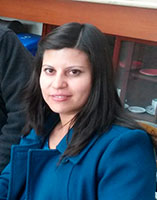 Pamela Cruz
Research Professor at UTE
She is academic coordinator of the Faculty of Law and Social Sciences and of the Journalism program at Universidad UTE. She holds a master's degree in communication and media studies from the Latin American Faculty of Social Sciences Ecuador. She also served as publications coordinator at the International Center for Higher Studies in Communication for Latin America (CIESPAL). She is dedicated to academic research and her work focuses on migration and human rights.
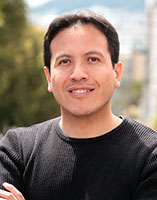 Xavier Gómez
Independent journalist and university professor
He holds a master's degree in multimedia journalism and is a doctoral candidate in journalism at the Universidad Complutense de Madrid. In Ecuador he has contributed to magazines such as Soho, Mundo Diners and Cartón Piedra, and the newspapers El Comercio and Hoy, and in Spain to FronteraD and AB Cultural. Two of his chronicles are part of the anthology La invención de la realidad. He currently researches the relationship between writing technologies and contemporary narratives. He is a journalism professor at the Universidad de las Américas (UDLA).
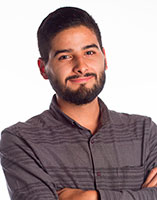 Miguel Loor
Sembramedia Ambassador in Ecuador
He is a journalism alumnus of Universidad San Francisco de Quito. He currently teaches communication at his alma mater and is also the Sembramedia ambassador in Ecuador. He holds a master's degree in digital media theory from Goldsmiths, University of London. He works as a communication consultant on various social and cultural projects. He is the producer of "Postlatino," a podcast about music and identities in transformation.
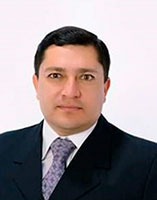 Danilo Villaroel
Professor at Universidad de Bolívar
Winner of the National Eugenio Espejo Award in 2010, granted by the National Union of Journalists of Ecuador. He founded the Nuevo Diario de Riobamba. He was a fellow at the Ibero-American Institute of Journalism José Martí in Cuba and holds a master's degree in Corporate Communication. He currently teaches communication at the Universidad Estatal de Bolívar.
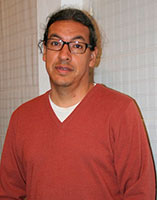 Gustavo Abad
Professor at Universidad Central and UASB
Journalist and communication researcher, he has worked as a reporter and editor at the newspapers El Comercio, Hoy, El Universo and El Telégrafo, in the areas of research and culture. He was editor of the Chasqui magazine at the International Center for Higher Studies in Communication for Latin America (CIESPAL). He currently teaches at the Andina Simón Bolívar and Central del Ecuador universities. He has published several books and dozens of journalistic and academic essays.
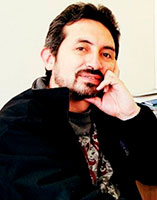 Samuel Yánez
Research Professor at UTE
Publicist with more than 25 years of professional experience, he has studied graphic design, worked at television production companies and advertising agencies as creative director and art director, and also works as an independent professional. Today he is a research professor at Universidad UTE.
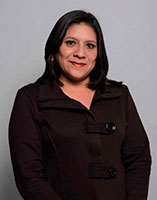 Mayra Martinez
Research Professor at UTE
She holds a master's degree in Higher Education, a master's degree in Organizational Communication, and a bachelor's degree in Social Communication. She is the author of the book Ley publicidad e impacto and of several articles in indexed journals. She is a research professor at Universidad UTE.
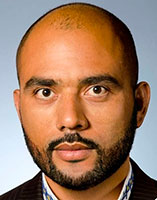 Juan Camilo Molina
CIESPAL Researcher and UTE Professor
He is a professor of sociology of communication and bioethics, president of the Human Research Ethics Committee at Universidad UTE. He is also academic coordinator of CIESPAL, coordinator of the Regional Observatory of the Alliance of Civil Society Organizations for Development Effectiveness, and member of the DAC Dialogue Group of the Organisation for Economic Co-operation and Development with Civil Society.
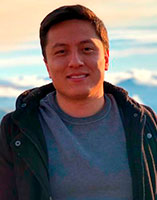 Santiago Uribe
Two-time winner of the Drone Focus Film Festival
Declared Tourism Ambassador of Ecuador, he holds a degree in Digital and Multimedia Design and is pursuing a master's degree in "Pedagogy in Digital Environments" at Universidad Indoamérica. He has 6 years of experience in drone operation for audiovisual production. He has produced several tourism videos that have led him to win 3 international awards: 2 in the United States at the Drone Focus Film Festival and one in Ukraine at the Arts and Tourism Festival in the city of Kharkiv.
Agenda
Workshops
Workshop 1: Short video production for social media
Instructor: Paula Daibert, Senior video producer at AJ+ Español (Mexico - Brazil).
Workshop 2: Introduction to data journalism
Instructor: Marjorie Ortiz, research coordinator at the newspaper El Universo.
Workshop 3: Safety techniques for high-risk coverage (reserved spots).
Instructor: Jean-Christophe Gérard, Security Director of the France Médias Monde group, France.
Workshop 4: Cool tools for Mobile Journalism (MOJO)
Instructor: Luis Daniel Luengo, COCOA - USFQ.
Workshop 5: Storytelling for immersive journalism
Instructor: Clàudia Prat, Spanish journalist based in New York, contributor to Time, BBC and others.
Workshop 6: Entrepreneurial journalism – how to create a media outlet?
Instructor: Miguel Loor, Sembra Media ambassador in Ecuador.
Workshop 7: Computer security techniques for journalists (reserved spots)
Instructor: Jorge Luis Sierra, director of the Border Center for Journalists and Bloggers.
Workshop 8: The first steps of a chronicle writer
Instructor: Alexis Serrano, general editor of the newspaper La Hora.
Workshop 9: New regulations for journalism, disinformation and security
Instructor: César Ricaurte, executive director of Fundamedios.
Workshop 10: How to take the first step in VR & 360?
Instructor: Ben Kreirmer, independent journalist and advisor to BuzzFeed (USA).
More information about the workshops click here.
Benefits for participants
The Journalism in Debate Conference will have, for the ninth time, a section dedicated to research and academic analysis, in which reflections will be sought around one or more of the following topics:
- The strategies, techniques, narrative formats and content of media outlets to improve coverage of human rights topics.
- The emergence of new profiles of reporters, researchers and editors for journalism as a public interest approach related to rights, gender, migration, and activism.
- New formats for telling compelling and sensitive rights stories for increasingly digital audiences.
- The risks, work and defense of journalists and activists in the coverage of the aforementioned fields.
- How to train students to avoid fetishism in journalism in defense of human rights?
- Cases of excellence in the practice of journalism, using new technologies.
- Collaborative and cross-border journalism in human rights coverage.
- Techniques and tools for journalism in the digital age.
- The evolution of journalism in the face of new technologies.
- Validity of traditional formats and their adaptation to social media and the digital world.
Registration
The conference is free, but registration is required. Registration is online. A certificate validating attendance and training received during the conferences can be obtained for a symbolic fee.
Certificate costs
- General public: $50
- External officials and students: $50
- USFQ students: $40
Payment methods
Credit card, bank deposit or bank transfer.
Details for deposit or transfer:
Banco Bolivariano
Checking Account
No. 5075003350
In the name of USFQ
*If you make a deposit or transfer, you must register in the depositor's details the full name of the person who will receive the certificate.
Organizers


With the support of:


Ecuador Border Journalism Contest
In honor of the journalism team from the newspaper El Comercio kidnapped and murdered on the northern border between Ecuador and Colombia, the Journalism program at Universidad San Francisco de Quito launches the first Border Journalism contest. "The purpose is to promote better journalism in the border areas of Ecuador, the pursuit of excellence, innovation, safety, and rigor in the treatment of facts by journalists covering these areas," explains Eric Samson, coordinator of the program.
"The contest seeks to ensure that borders are not forgotten, that they do not appear in the news only when there are attacks or crimes. There are many human stories to tell," says Tania Orbe, journalism professor at USFQ. The contest has the financial support of Unesco and the Embassy of the United States of America in Ecuador for the presentation of awards to the winners. There will be 3 categories: Professional, Student and Initiative, and a Permanence award that will be given only once.
The winner of first place in the Professional category will receive $600 in cash; in the Student category, $300, and in the Innovation category, $600. The winner of the Permanence award will receive a professional drone for mobile coverage. Second-place finalists will receive a mojo kit (mobile journalism) to carry out coverage with their cell phone. Third-place finalists will receive mojo accessories.
Competing entries must be registered on the Award platform from the international congress Periodismo en Debate website until Monday, March 30, 2020.
Any published or unpublished work with a diversity of stories, topics, formats and media may be entered in any of these contest categories, as long as they comply with the provisions set out in the rules described on the PerDebate19 event website. Journalistic works produced on both sides of Ecuador's border areas, both with Peru and Colombia, published by journalists of any nationality between May 1, 2018 and October 30, 2019, may compete.
Winners and finalists will be invited to the Universidad San Francisco de Quito campus in Cumbayá, Quito, Ecuador, to participate in the awards ceremony on Thursday, April 30, 2020.